
Home » Posts tagged 'Home Visiting Relief Society'
Tag Archives: Home Visiting Relief Society
Wilfrid Law Docker (1846-1919) Accountant and a thorough Anglican
Upon the death of Wilfrid Law Docker (often misspelled as Wilfred) it was said that death had removed one of those men who are the salt of the community and furthermore that:
There are many whose loss would attract greater notice, but there are few who will be so long and so much missed in a number of public affairs touching the religious and philanthropic, and educational interests of this city.[1]
Who, then, was Wilfrid Law Docker? What had he done in his life to be accorded the designation of ‘salt of the community’? And why would he be ‘much missed in … the religious and philanthropic and educational interests’ of Sydney?
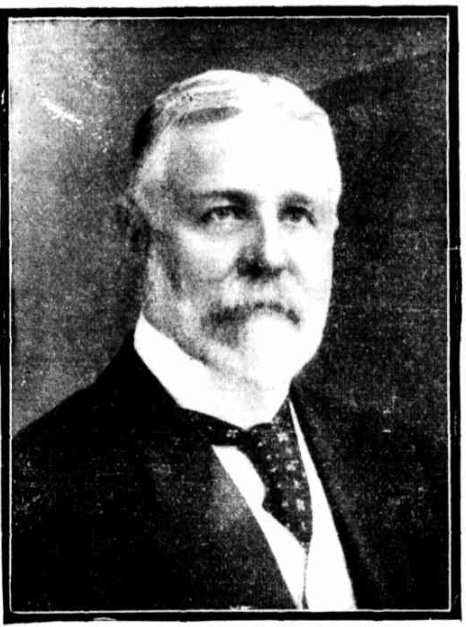
Docker was born on 2 May 1846 to English-born Joseph Docker (1802-1884) and Scottish-born Matilda Brougham, Joseph’s second wife. The birth took place at Scone, NSW, on the family property Thornthwaite, and he was given ‘Law’ for his second name, the family name of his great-grandmother, Agnes (1737-1819). Joseph was a surgeon who arrived in Sydney in 1834 and took up 10,000 acres which he named Thornthwaite after the area from which he came in England; he became a grazier and politician. On the death of his first wife Agnes nee Docker (?-1835), Joseph returned to Britain and in 1839 married Matilda Brougham, the daughter of Major James Brougham of the East India Company, and his wife Isabella nee Hay. The service was conducted by Rev John Sinclair one of the ministers of St Paul’s Episcopal Chapel, York Place, Edinburgh.[2]
Wilfrid, along with his brother Edward, received his schooling at the ‘Collegiate School’ at Cook’s River (CSCR), Sydney, which was run by the Rev William Henry Savigny, an Anglican, educated at the Bluecoat School, London, and was an Oxford graduate. Prior to coming to NSW in 1853, Savigny had taught at Bishop Corrie’s Grammar School at Madras and at the Sheffield Collegiate School.[3] He earned
… a reputation for severe discipline, even in those ‘hard’ days, and when administering corporal punishment to the batch of boys — a most unusual occurrence — it was his custom to punctuate his strokes with quotations from the classics in Latin.[4]
The school was not cheap at 60 guineas per annum, paid in advance, for each quarter year. The course of instruction embraced the ‘classics, mathematics, the French and German languages, ancient and modern history, geography, and elementary natural philosophy’.[5] It was also said of the school that ‘Banking establishments of the town, the offices of solicitors, and the counting houses of merchants will furthermore establish the truth that … [the] School has fulfilled its functions in giving to boys of the colony a sound, liberal, and commercial education’.[6]
As the CSCR was a boarding school that did not accept boys until they were 10 years old, Wilfrid would not have gone there until May 1856 at the earliest. It is probable that Wilfrid was taught by Savigny for the whole of his time at CSCR for Savigny remained at the school for six years until 1862 when he was appointed Warden of St Pauls.[7] Around this time, Wilfred would have left school to begin his commercial career.
(more…)Home Visiting and Relief Society
The Home Visiting and Relief Society (HVRS) was originally to be called after the ‘Poor Room-keeper’s Society’. This was the shortened name of ‘The Sick and Indigent Room-keepers Society’ formed in Dublin in 1790. It was decided, however, that the proposed name did not do justice to the aims of this new society and so it was named the ‘Home Visiting Relief Society’. As Sir Alfred Stephen said ‘it was very desirable that the name of the society should be such as should carry with it to the public an impression of what its purposes were’.[1] The leading objects of the HVRS were that of
visiting, at their own homes, such of the distressed inhabitants of Sydney as belonged to the educated classes and had seen better days, but who had been reduced to poverty, and who, from their position, from their more refined feelings and associations, were utterly unable to go into the streets to beg, and who were pained at the very idea of soliciting charity in any form.[2]
In Sydney the formation of HVRS was discussed in the Judges’ Chambers at the Supreme Court Sydney on December 16, 1861 at a meeting chaired by Sir Alfred Stephen. It was attended by Mr Justice Wise, Mr Justice Milford, Sir W M Manning, the Rev A H Stephen, Dr Douglass and five or six other gentlemen that included Captain Samuel North, Dr Charles and probably John M’Lerie, Richard Jones and Captain Scott.[3] According to Sir W M Manning it was Dr Henry Grattan Douglass[4] whose proposal it was to form such a society and that he took the idea from a society of the kind that had existed for some time in Ireland (the ‘Poor Room-Keeper’s Society’). So, as Manning said, the origin of the Society was due to Ireland and an Irishman.[5] The nucleus of the society’s funds was £100 which Douglass managed to persuade W C Wentworth to give, being a month of his salary as President of the Legislative Council.
Charles Nightingale (1795-1860), Edward Ramsay (1818-1894) and James Druce (1829-1891)
Charles Nightingale (1795-1860), Edward Ramsay (1818-1894) and James Druce (1829-1891) Charity Collectors
Obtaining funding for the work of the various nineteenth century philanthropic organisations was always a challenge. There was little government financial assistance available, and the various organisations were dependent upon the generosity of the public for financial support. In order to gain that support the many charities who wished to collect money from the public engaged in a number of activities and strategies. Prominent among their activities was the public annual meeting, often chaired by a socially important person, where the activities of the organisation were reported and supportive resolutions passed. At the meeting someone, usually the secretary of the committee, would read a report detailing what had been achieved in the year past, often giving encouraging examples of success as well as underlining the difficulty of the task which the charity had undertaken. Such reporting made the committee that ran the charity accountable to the public and to its subscribers. It also showed what had been achieved through public financial support, educated the community on the continuing need for the charity, and gave hope for success in the future so that there might be continued interest and increased financial support given by individuals.
Nineteenth century newspaper editors, at least up until the 1890s, gave very sympathetic treatment to such organisations and often printed extensive reports of the meetings which gave further publicity. Printing the annual reports of these organisations and circulating them to their subscribers was also a vital part of the strategy. Such documents contained the secretary’s report, a financial statement, the lists of subscribers and the amount of their subscription, and newspapers often printed subscriber and donation lists as well. It has been suggested that the existence of these subscriber lists is evidence that nineteenth century philanthropy was a morally approved way of self-aggrandisement.[1] Motives are difficult to determine and it may well be that, for some, giving was motived by being seen to have done the ‘right societal thing’ or by a desire to gain praise for the size of a donation. For others, however, such support was undoubtedly a response to need and a desire to help without any ulterior motive. From the organisations’ point of view, it was an effective means of giving a receipt and perhaps a means of encouraging (more…)
 Philanthropists and Philanthropy