
Home » Posts tagged 'Home Mission Society'
Tag Archives: Home Mission Society
Wilfrid Law Docker (1846-1919) Accountant and a thorough Anglican
Upon the death of Wilfrid Law Docker (often misspelled as Wilfred) it was said that death had removed one of those men who are the salt of the community and furthermore that:
There are many whose loss would attract greater notice, but there are few who will be so long and so much missed in a number of public affairs touching the religious and philanthropic, and educational interests of this city.[1]
Who, then, was Wilfrid Law Docker? What had he done in his life to be accorded the designation of ‘salt of the community’? And why would he be ‘much missed in … the religious and philanthropic and educational interests’ of Sydney?
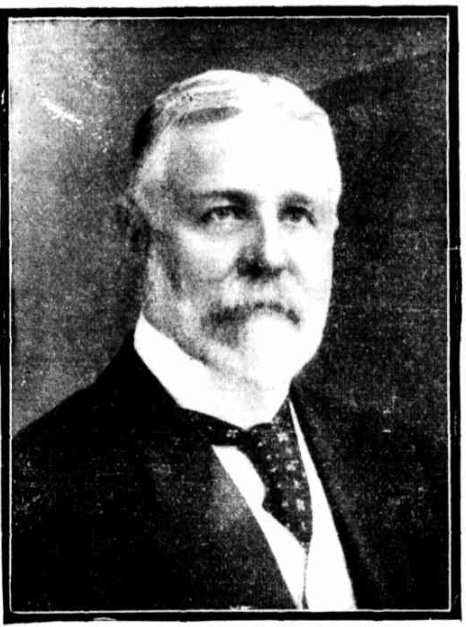
Docker was born on 2 May 1846 to English-born Joseph Docker (1802-1884) and Scottish-born Matilda Brougham, Joseph’s second wife. The birth took place at Scone, NSW, on the family property Thornthwaite, and he was given ‘Law’ for his second name, the family name of his great-grandmother, Agnes (1737-1819). Joseph was a surgeon who arrived in Sydney in 1834 and took up 10,000 acres which he named Thornthwaite after the area from which he came in England; he became a grazier and politician. On the death of his first wife Agnes nee Docker (?-1835), Joseph returned to Britain and in 1839 married Matilda Brougham, the daughter of Major James Brougham of the East India Company, and his wife Isabella nee Hay. The service was conducted by Rev John Sinclair one of the ministers of St Paul’s Episcopal Chapel, York Place, Edinburgh.[2]
Wilfrid, along with his brother Edward, received his schooling at the ‘Collegiate School’ at Cook’s River (CSCR), Sydney, which was run by the Rev William Henry Savigny, an Anglican, educated at the Bluecoat School, London, and was an Oxford graduate. Prior to coming to NSW in 1853, Savigny had taught at Bishop Corrie’s Grammar School at Madras and at the Sheffield Collegiate School.[3] He earned
… a reputation for severe discipline, even in those ‘hard’ days, and when administering corporal punishment to the batch of boys — a most unusual occurrence — it was his custom to punctuate his strokes with quotations from the classics in Latin.[4]
The school was not cheap at 60 guineas per annum, paid in advance, for each quarter year. The course of instruction embraced the ‘classics, mathematics, the French and German languages, ancient and modern history, geography, and elementary natural philosophy’.[5] It was also said of the school that ‘Banking establishments of the town, the offices of solicitors, and the counting houses of merchants will furthermore establish the truth that … [the] School has fulfilled its functions in giving to boys of the colony a sound, liberal, and commercial education’.[6]
As the CSCR was a boarding school that did not accept boys until they were 10 years old, Wilfrid would not have gone there until May 1856 at the earliest. It is probable that Wilfrid was taught by Savigny for the whole of his time at CSCR for Savigny remained at the school for six years until 1862 when he was appointed Warden of St Pauls.[7] Around this time, Wilfred would have left school to begin his commercial career.
(more…) Philanthropists and Philanthropy