
Home » Temperance
Category Archives: Temperance
John Barnett (1837-1905) an unremarkable but important life
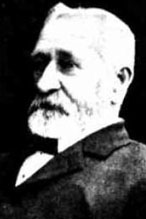
John Barnett (1837-1905) was born in Stepney, Middlesex, England, on 21 February 1837, the son of John Barnett (Senior) (1810-1858), Grocer and Sugar Refiner and Ann Eliza Winkworth (1807-1842).1 In December 1859, John married Janet Gowanlock Smith (1840-1927) at Waverley, Sydney, and they were to have eight children, four of whom lived to adulthood.
John’s parents, together with his 6-year-old sister Elizabeth and his 3-year-old self, had emigrated from England to Sydney in New South Wales (NSW), arriving on the Ann Gales on 12 July 1840. His mother, Ann Eliza, died not long after they arrived in Sydney, and John Snr married Janet Scot Smith (1826-1872) in 1843. The family had been sponsored by William Knox Child as part of Child’s attempt to set up a sugar refining business in NSW. The Ann Gales had on board the Child family and other sponsored workers in the sugar trade,2 a steam engine, sugar house plant and machinery for the Australian Sugar Company.3 This was a serious attempt at commencing a ‘sugar trade’ business in the Colony of NSW, and Child had invested some £20,000 in this project.
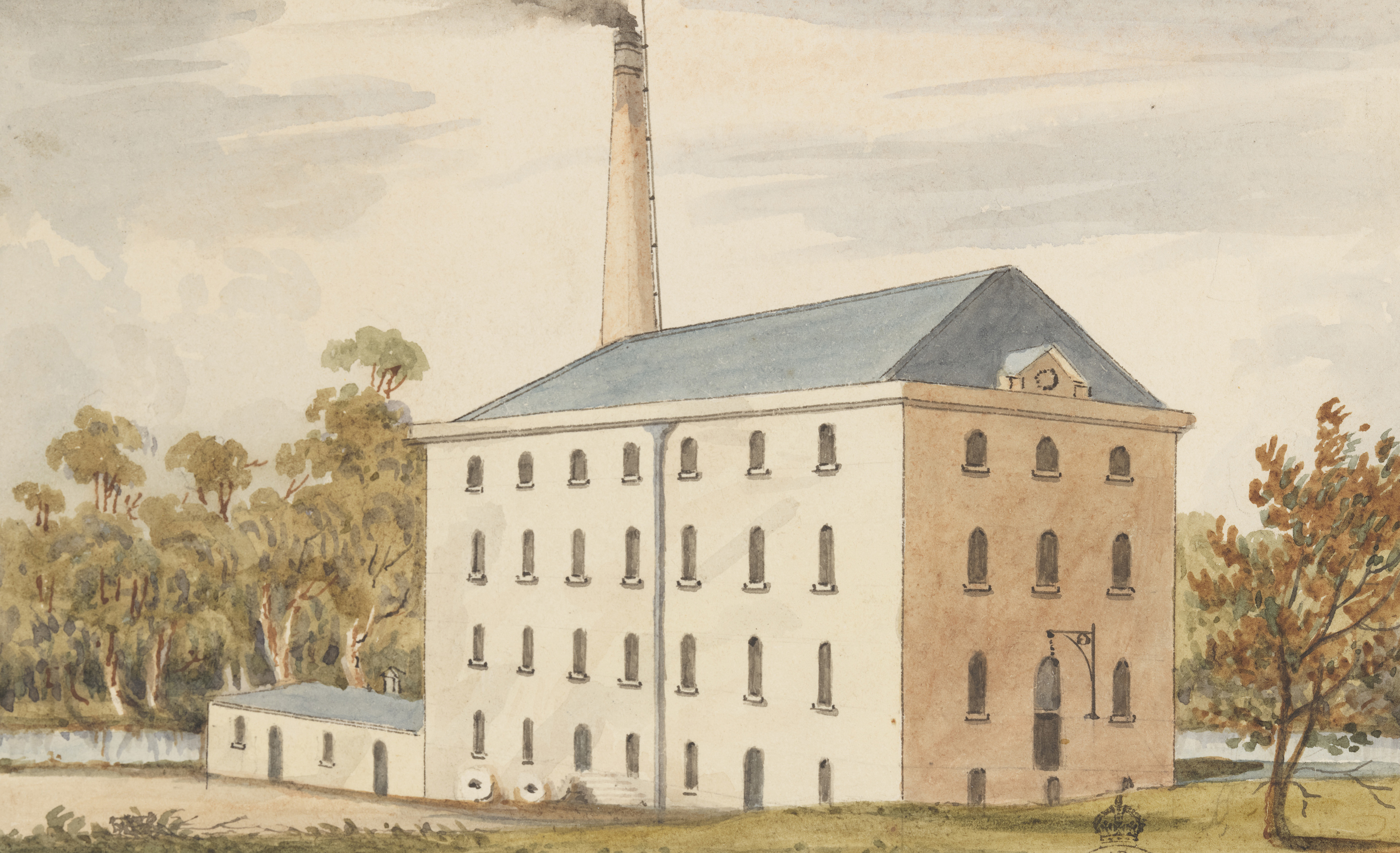
A sixty-acre site was chosen at the Cook’s River on Robert Campbell’s Canterbury Estate, and a mill was constructed there, and a town was built for the workers.4 By late 1842, sugar had been refined and was ready for market. It was reported that ‘this company is now in operation and will be enabled to supply the whole of the Australian Colonies with refined sugar at the following prices … ’.5 A dispute soon broke out among the partners, which threatened the viability of the company. Then, in 1843, Edward Knox took over as manager, and the company prospered, becoming known as the Colonial Sugar Refining Company (CSR) in 1855.6
(more…)Samuel Goold (1820-1899) Congregationalist, Bookseller and Temperance Advocate
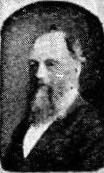
Samuel Goold
Samuel Goold was born in 1820 in Norton Lindsay, Warwickshire, England, the son of William Goold, variously described as a miller[1] or a grocer,[2] and his wife Elizabeth Canning. Samuel was their fifth son of nine children. Two of his brothers, John and Jabez, also came to the colony of NSW at some stage.[3] In 1847, Samuel married Mary Ann Johnson at the Tottenham Baptist Chapel and his profession was given as ‘Missionary’.[4] Mary Ann was the daughter of Philip Johnson, a shoemaker, and his wife Mary and was born in 1819 at the workhouse of St Botolph, Aldgate, London.[5] At the age of 13 she became a member of the Congregational Church, worshipping in the Poultry Chapel, London, then under the care of the Rev John Clayton Jnr (1780-1865).[6]
Arrival in the colony of New South Wales
Together with Mary Ann’s mother and sister, Samuel arrived in Queensland in January 1849 aboard the Fortitude, Rev Dr John Dunmore Lang’s first chartered immigrant ship. Samuel had been an apprentice and was probably an apprentice draper,[7] but his profession on the shipping lists was given as ‘bricklayer’.[8] It has been suggested that he helped build the Roman Catholic Chapel in Elizabeth Street, Brisbane,[9] but this cannot be possible as the Fortitude arrived in Morton Bay on 21 January 1849, and its passengers were quarantined as there were cases of typhus on board. The first mention of ‘Mr Gould, the builder’ in connection with the Roman Catholic Chapel, is on 31 January 1849 while Samuel Goold was still in quarantine.[10]
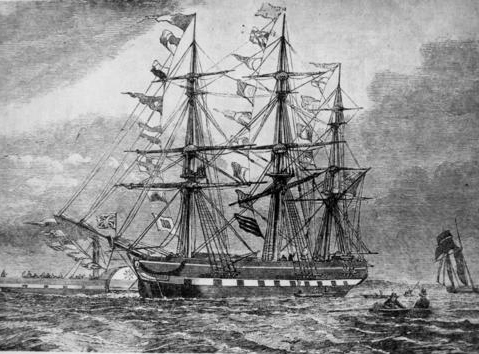
The Fortitude (Queensland State Library)
Sydney bound
Samuel and his wife did not remain in Brisbane but travelled to Sydney in September 1849.[11] It is not known if their departure was a result of disillusionment with the unfulfilled promises of Lang concerning the provision of land for the immigrants or whether it was related to the death of their infant son, Samuel, which occurred a few weeks before.[12] In Sydney, however, they wasted no time linking with the (more…)
William (1827-1925) and Hannah (1829-1909) Druce
William Druce (1827-1925) Sydney City Missionary & Temperance Advocate
and
Hannah Druce (1829-1909) Sydney Night Refuge & Reformatory Manager
William Crickmer Druce (7 Oct 1827-3 May 1925) was born at Bury St Edmonds, Suffolk, England and died at Lakemba, NSW, Australia. He was the third son of Thomas Charles Druce and Elizabeth Crickmer[1] and married in Sydney in April, 1854[2]. His wife, Hannah Church (1829 – 2 Oct 1909) was born in Deal, Kent[3] and together they had three daughters. Fanny Elizabeth (20 Apr 1855 – 10 Jan 1924) was born in Sydney and married Thomas Pankhurst in 1877. Roseanna Jane (1858-23 Jul 1936) was born in Yackandandah Victoria and married George Daniel Clark in 1875,[4] while Diana Harriet (24 Feb 1861 – 20 Oct 1905) was born in Yackandandah, Victoria, and married James Hirst in 1879.
Hannah arrived in the colony of New South Wales (NSW) in December 1852 on the William Kennedy and her occupation was listed as a general servant who could also read and write and was of the Church of England. William had been apprenticed to a master mariner at Great Yarmouth, England, but he and his bother George came to the colony of NSW sometime prior to 1854 and by 1861 William was a miner on the Yackandandah goldfields in Victoria. By 1865 he had returned to the sea being the master, for a short while, of the Orient[5], a schooner carrying coastal cargoes, a quartermaster on the Rakaia, sailing between New Zealand and Sydney in 1867, a member of the crew of the mission ship the John Williams when it was wrecked in 1867[6] and a seaman on the John Wesley, plying between Sydney and the South Sea Islands in 1868. [7]
William had an interest in the Christian faith, mission work, temperance and the welfare of seamen and he became a missionary with the Sydney City Mission (SCM) in 1871, a position he held until 1879. The SCM employed him to work specifically with seamen which he did with considerable zeal and effect as recorded by the Rev Thomas Gainford[8] of the Bethel Union, with whom he worked: (more…)
 Philanthropists and Philanthropy