
On 21 July 1897, Edward Miller Gard Eddy died at the Gresham Hotel, Brisbane. He had been scheduled to meet the Queensland Commissioner of Railways at Wallangarra on its remote railway station not far over the New South Wales /Queensland (NSW/Qld) border. This station was where the NSW railway gauge of 1435 mm (4 ft 81/2 in) met the Qld gauge of 1067 mm (3 ft 6 in). When Eddy arrived he was so ill he had to be helped across the platform to board a train to Brisbane. Eddy had been travelling by train from Sydney on railway business, inspecting the northern rail lines and then, in order to seek an improvement in his health, he had intended to travel to Brisbane where he would meet his wife, Ellen.[1] He died one month short of his 46th birthday.[2]
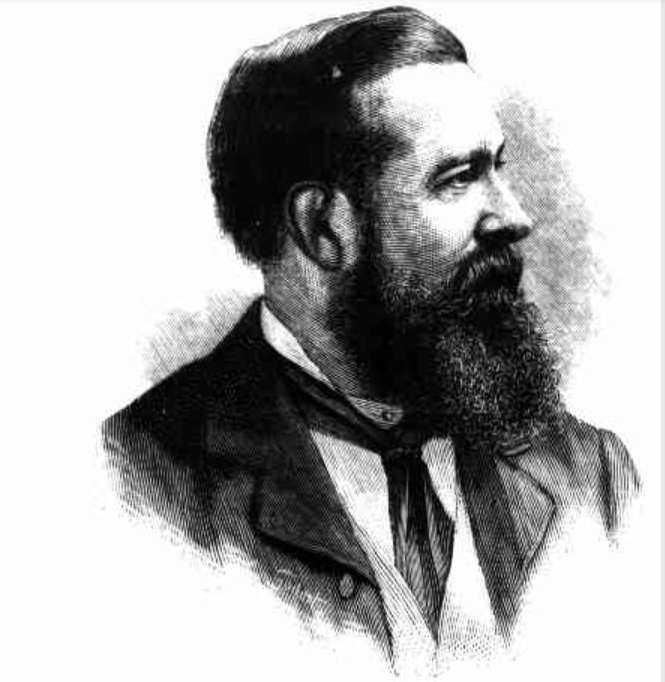
English born, Eddy arrived in Sydney in October 1888, having
…accepted the position of chief commissioner of the New South Wales Railways at a salary of £3000 with a future increase left to the ‘justice of the Government and Parliament’. He wrote: ‘I take so much delight in my work, and I can see how, in a country which will owe much to the judicious management and extension of its railways, I could be of great service to the Colony, and also obtain credit for myself’.[3]
On the one hand, in his time as chief commissioner, despite
… political obstruction and criticism and economic depression Eddy extended the railway system. He introduced more powerful locomotives, better rolling stock, improved facilities at stations, better public relations and an active advertising campaign which encouraged new traffic. While unsuccessful in bringing the railway to the centre of Sydney, he enlarged the tramway network, and permitted the first experiments in electric traction.[4]
On the other hand, it has been said of him that he displayed a ‘merciless anti-unionism’ which ‘suppressed the development of mass unionism in the railways for a decade’.[5] At the time of his death, against the backdrop of almost universal praise for Eddy, one contemporary newspaper poured highly critical commentary upon his life and accomplishments:
It cannot be forgotten that it was Eddy who, under the promptings of Parkes, McMillan, and Co. was one of the main factors in defeating the workers in the great Maritime strike. It was Eddy who systematically crushed out all and every form of Labor organisation in the Railway Service. Eddy it
was who hunted prominent Trade Unionists out of the Railway Service; who forbade State Railway employees to take part in political meetings on pain of dismissal. This is the same Eddy who dismissed old and tried, but still competent servants of the State, by the score, in order to make room for his pimps and parasites, the majority of whom were specially imported from “Home”, in order to act as spies and informers on the Australian workers. It was Eddy who ruined the Civil Service Superannuation Fund by his wholesale dismissals from the Railway Service which created such sudden and enormous calls on that Fund that it could not stand the strain, and consequently became bankrupt, in which condition it has remained ever since. So far as Labor is concerned, Eddy was from first to last a cruel menace to the wage-earners, whom he did more to harass, worry, and keep in subjection than any other man who has figured in the annals of this clique-cursed country as a ‘professional enemy of the people’. He was aided and abetted by the Press and Parliament, backed up by the squatting and importing rings, in his systematic attacks on the rights of Labor. With Eddy, Labor had no rights, or, having them, to assert them was wrong and meant ruin so far as he was concerned. He was, in short, a despot in a democracy, set up and sustained by a servile Parliament, which slavishly submitted, as it still slavishly submits, to the dictation of a subsidized Press which consents to do the dirty work of importers’ journalistic drummers and bummers.[6]
It is no doubt true that Eddy was not greatly in favour of unionisation and resisted its development, but to characterize him in such a way as to imply that he did not do anything positive for his workforce seems somewhat out of step and excessive compared with what happened when he died. At that time, the railway men and the public, in contrast to this view, afforded him a great deal of respect.
Firstly, there was the immediate reaction where it was said that the
…. number of messages of condolence, which continued to arrive from England and representative public men and institutions throughout Australia, bore testimony to the universal character of the grief that was everywhere felt at the sudden effacement of so distinguished and popular colonist, and so eminent and capable a public-servant. Among the railway bodies which the deceased controlled, the manifestations of regret at the death of their capable chief were unanimous and genuine. It is many years since the demise of any officer of the State caused such earnest expressions of regret for what is felt to be a deep loss to the commerce and capability of the colony.[7]
At his funeral it was reported that ‘thousands of railway men walked in front of the hearse’.[8] This action would seem to be one of voluntary respect and not one of a required obligation to a boss. The stationmaster and staff at Strathfield draped the poles supporting the awnings on the four platforms with black and studded them with white camellias, while the small wreaths were hung from the centre of the posts. Members of staff wore a crepe band on the left arm during the day.[9] His funeral was rated as one of the largest private funerals up to that time, with an estimate of some 5,000 people at the grave site.[10]
Eddy was buried with the rites of the Church of England, but the degree of his commitment to the Christian faith is unknown. In many of the Sydney Churches at the time, his life’s work was ‘held up as an inspiration to others to faithfully follow in the path of duty’.[11] A special service in memory of him was held at St Mark’s Darling Point which was the church his family usually attended.[12] In his evening service, John Walker, minister of Woollarah Presbyterian Church, said of him that he
was a man with a high sense of duty, persevering in the face of great difficulties, and one who was admired for his modesty, his amiability, and his marvellous ability. He considered his death a great loss to the whole of the colonies. His life was a life of inspiration to all men, and particularly a noble example to young men.[13]
His grave in Waverly Cemetery is marked with a large white marble Celtic cross and is undecorated except for the christogram IHS (Jesus) at the intersection of the arms of the cross and its stem, supported on a pedestal, inscribed with the words of Revelation 2:10, ‘Be thou faithful unto death and I will give thee a crown of life’.
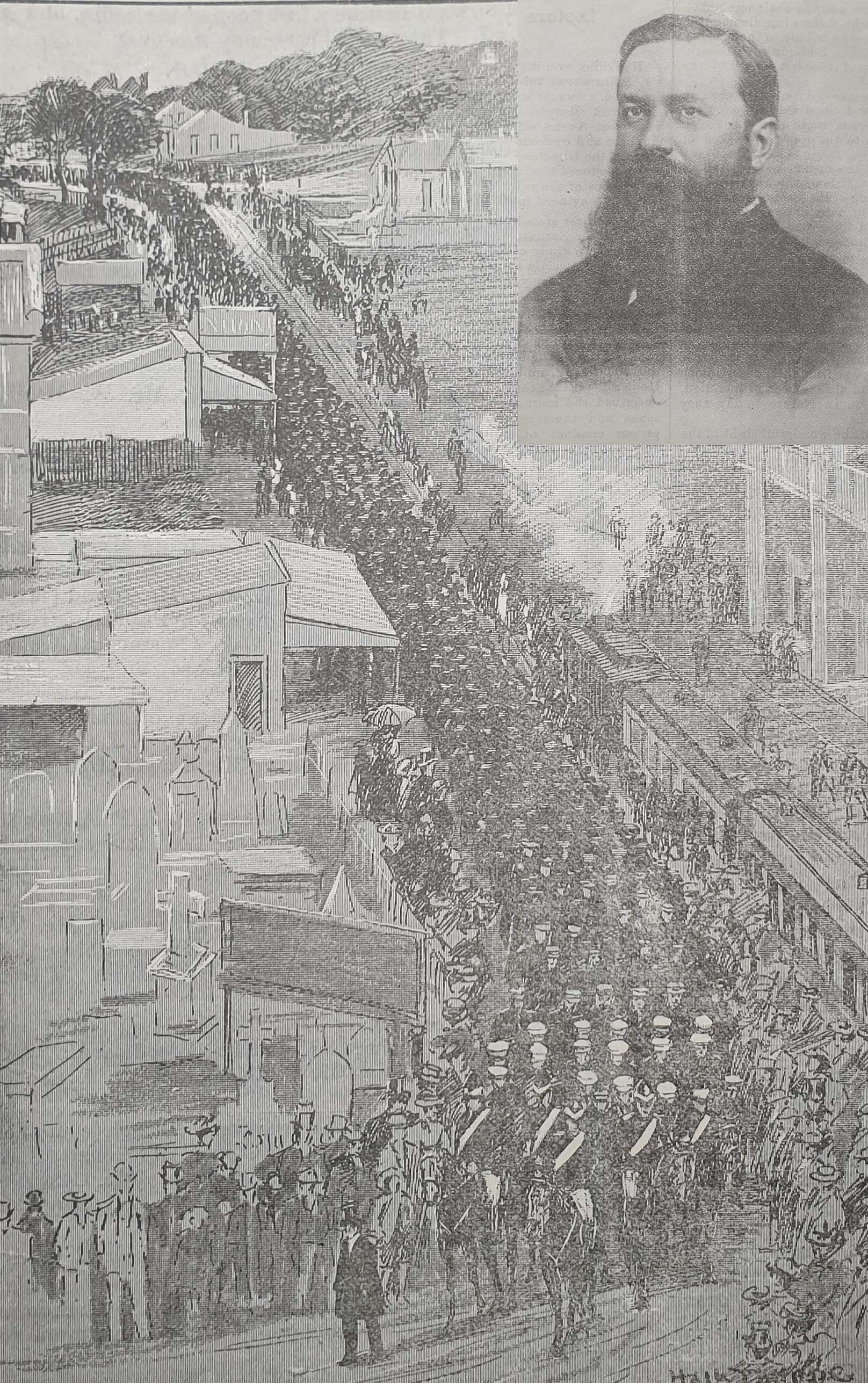
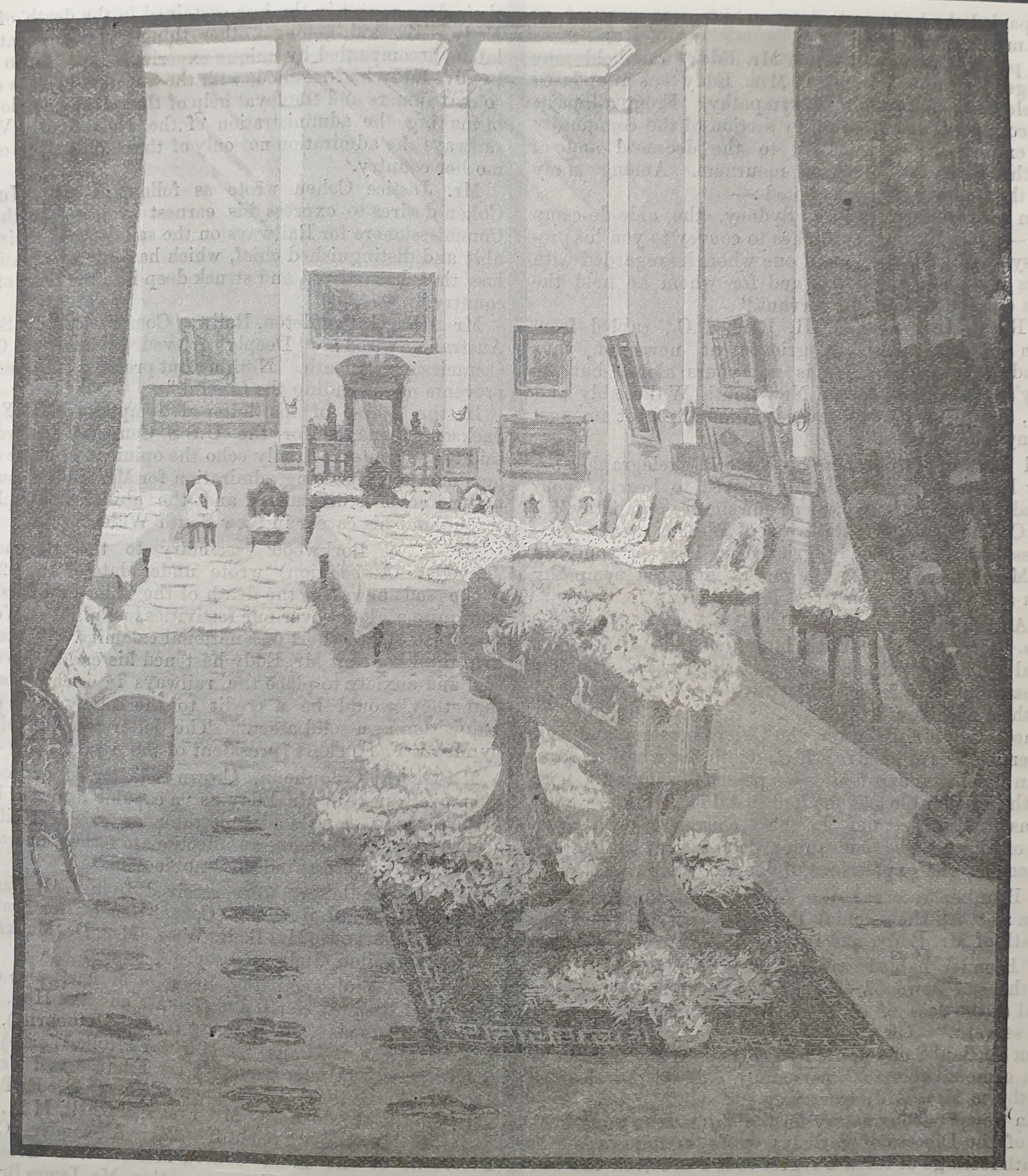
New South Wales Railway Budget July 19, 1897, page 228
Secondly, respect for Eddy was shown by a movement, strongly supported by the railway employees, to provide a suitable memorial to honour Eddy’s contribution to the colony of NSW by his ten years of service.
On 30 June 1897, a meeting was held of grain, dairy and livestock merchants in order to ‘formulate some plan whereby some public tribute can be paid to the memory and work of the late Mr Eddy.’[14] Wisely, this meeting decided that ‘all sections of the community, the Chamber of Commerce, the wool brokers, the stock-owners, and the railway people’ should join together for the purpose of giving ‘some contribution worthy of Mr Eddy.’[15] Shortly after, it was widely reported that the railway employees had decided on the establishment of an orphanage for the children of railway servants.[16] At a public meeting of all interested parties it was agreed that the wishes of the railway servants in this matter be supported and that the ‘proposed memorial be in the form of an orphanage for the children of persons in railway employment.’[17] The orphanage was to be known as the ‘The Eddy Orphanage’ later to be changed to ‘The Eddy Railway Orphanage’.[18]
A systematic canvas was conducted throughout the railway service in the state with collectors appointed and subscription lists collected by various bodies. The railway men gave liberally and the appeal seemed to promise that a substantial sum would be collected.[19]
Some public uncertainty existed as to the purpose and goal of the collection of the funds so the organizing committee issued a clarifying statement saying:
We are requested to inform you that, in view of the splendid services rendered to the colony by the late Chief Commissioner, and of his kindly feeling towards the railway men, it has been decided to perpetuate his memory by the erection of some memorial. At a meeting, representative of all branches of the commercial and producing interests, etc., it was decided that this would be best met by the establishment of an Orphanage to provide for, and to educate the children of railway servants left destitute by the untimely death of their parents. The object, it is hoped, will commend itself to the general public, in view of the intimate relations that exist between the railway service and the public, and that they will assist in the proposal, as it will at once fittingly perpetuate the memory of the late Chief Commissioner, and at the same time be an object of public good. In order to connect the Orphanage with the object of the memorial, it is considered that it should be known as the ‘Eddy Railway Orphanage.’[20]
By October 1897, £2,500 had been collected of which about £1,000 was contributed by railway employees. This amount of money, however, was not sufficient to fund what was envisaged so an approach was made to the NSW Government seeking a £ for £ grant on funds collected.[21] It was agreed by a meeting of the subscribers to the fund that they request,
the Railway Commissioners to act as trustees for the fund raised for the establishment of a railway orphanage; to be known as the Eddy Memorial Railway Orphanage, and that on receipt from the Railway Commissioners of their acceptance of the trust, the hon treasurers take such steps as may be necessary to legally vest the fund in the said trust.[22]
After this things went quiet until the Government indicated in October 1898 that a £ for £ grant on money collected had been provided for in its estimates.[23] This provision was to bring the total funds available to £5,000. The desire of the meeting of the subscribers was for the Railway Commissioners to be the trustees of the fund, however, while the Commissioners were willing, they had no legal power to proceed unless an Act of Parliament gave them authority to do so. Having further considered the governance needs of an orphanage, it was considered impractical to continue with the idea of empowering the Railway Commissioners and so an Act of Parliament was to be drawn up that empowered a board of management to govern the proposed orphanage.[24]
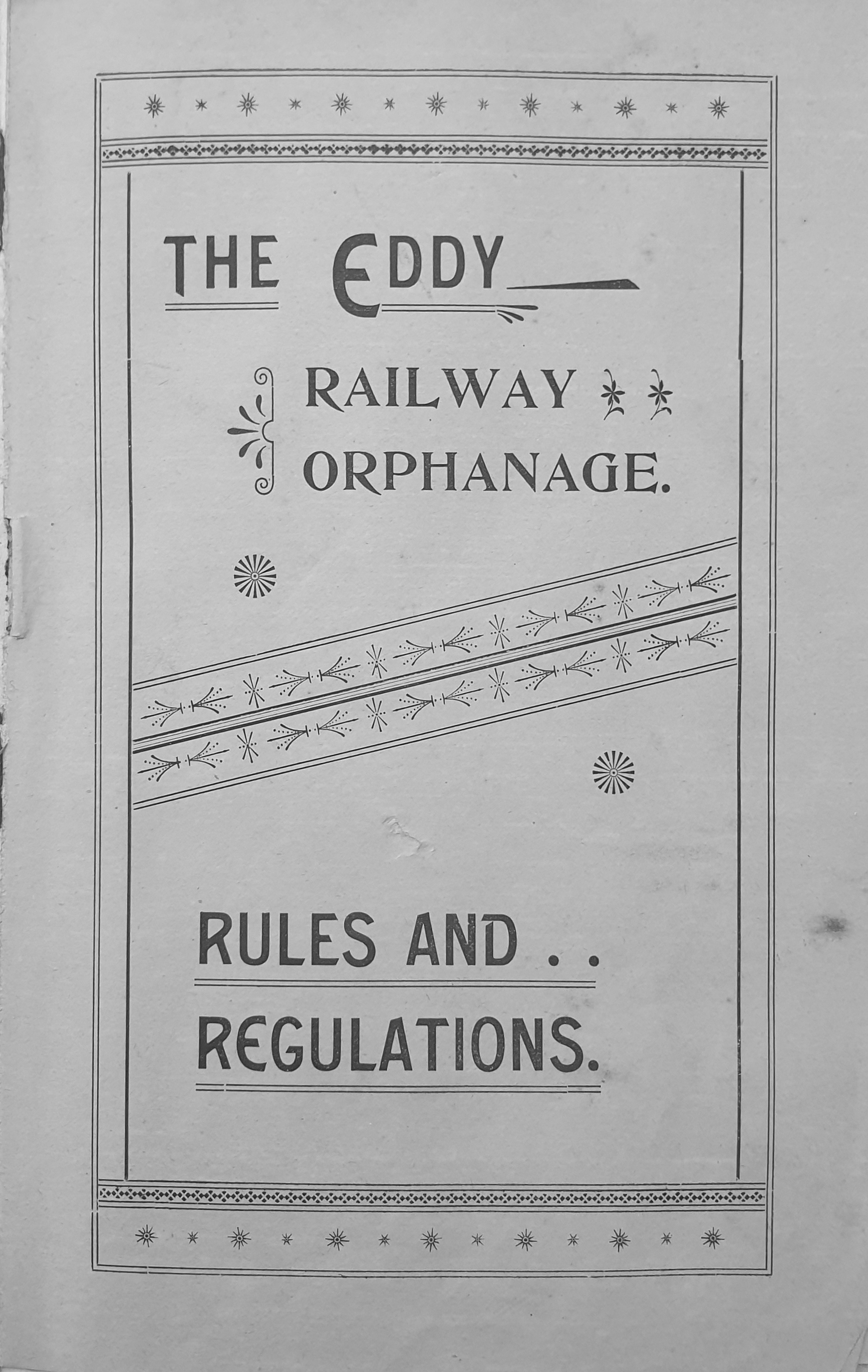
While awaiting for the passing of the Act a Board of Management of the Eddy Railway Orphanage was appointed. It was drawn from all divisions of the railway workers and was as follows: President, Thomas Hall (chief accountant); vice-presidents, Messrs. Hugh M’Lachlan (Secretary to the Commissioners and Henry Bryant Howe (works manager); hon. treasurer, John Parry (outdoor superintendent); hon. secretary; Ernest Burfield Taylor (cashier’s office); committee: Messrs. John Douglas (dispatch clerk) , Charles Paull (station master Darling Harbour), Alfred Edmund Blakey (tramways), Henry Darke (paint shops), William Montgomery Lackey (stationmaster, Burwood), Sidney Young (locomotive shops), John Kneeshaw (tramway superintendent), James Reid (interlocking branch), Edward Pyman (Andrew Percival, engine driver), John Thomas Eagle (carriage and wagon shops), Edward Silcocks (tramway inspector), and Thomas Felix Ryan (tramways)[25] auditors: Messsrs W H Williams (locomotive tramways shop) and PT Finnegan (chief accountant’s branch).[26]
The board looked for a suitable site for the Orphanage having decided on having a purpose-built home rather than altering an existing building. The site finally selected was six acres at Thornleigh, on the Great Northern line in the general area of where Eddy Street, Thornleigh, is today.[27] The accommodation proposed was for 12 boys and 12 girls, with all the necessary rooms and conveniences, but the building would be designed so as to permit its expansion should that prove necessary. The plans were to be undertaken by Mr. W H Davidson on a voluntary basis.[28]
In March 1899, a set of rules for the Eddy Railway Orphanage was approved and later that year the board of management clarified the qualifications for applicants:
… children of railway and tramway employees shall be entitled to the benefits of the orphanage. The qualifications of the so entitled to admission shall be that they shall be destitute, fatherless and motherless, but the board shall have power to admit fatherless children if accommodation and funds are available. No child shall be admitted who shall not previously have received the requisite certificate from the hon medical officers of the institution. No child shall be admitted of an age younger than four years, nor older than twelve years unless under special circumstance, to be decided by the board. No more thantwo children from one family shall be admitted to the privileges of the orphanage. An orphan may be removed if no longer in need of assistance, or if the medical officer certifies that its continuance in the orphanage is incompatible with the general welfare for the time being.[29]
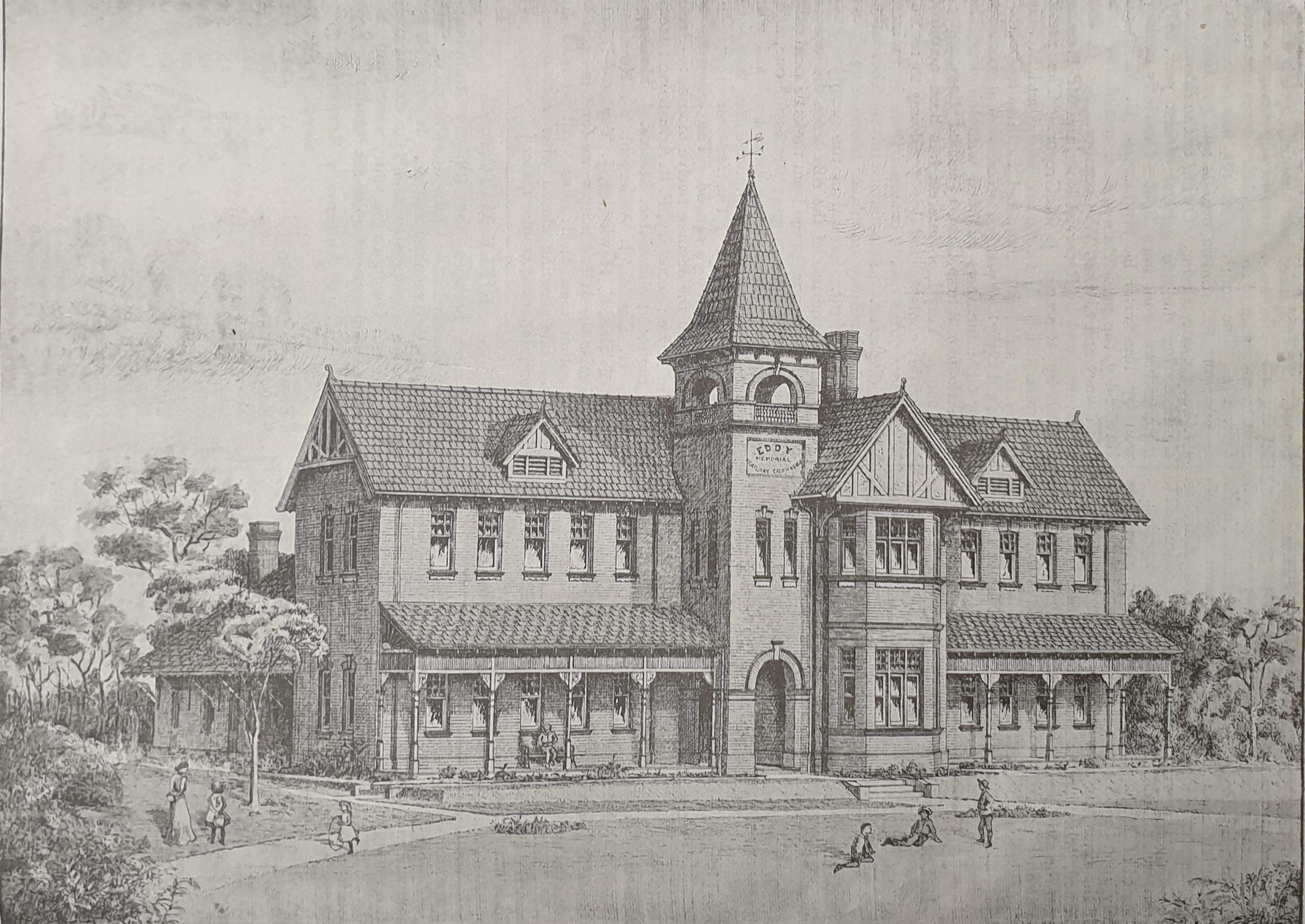
New South Wales Railway Budget Oct 1, 1901 page 32
The Act of Parliament was to prove difficult to obtain so, by 1900, the board, as an interim measure, had begun to financially assist suitable applicants who were living in various homes of friends. This provision was to remain in place until the orphans were able to be placed in the Orphanage itself.[30] In 1901, the necessary Act had still not been passed through Parliament so the building of the orphanage had not begun and as a consequence the number supported by the fund living in various homes had risen to 18 children.[31] By 1902, the progress Act necessary to commence building the orphanage had stalled in parliament as it had attracted significant opposition. Consequently, it was decided to abandon the attempt to provide an orphanage.[32] The proposed 1902 Eddy Orphanage Bill lapsed with the proroguing of Parliament, not because parliament was opposed to having a memorial to Eddy, but because the proposed orphanage would through its grant be, in part, Government funded. The Government, however, was not going to support an institution that was to be based on an out-of-date model of child support. The envisaged building was to be a barrack-style home for the orphans. This style of assistance to children had been displaced by a policy of boarding-out children in family homes. Sir Arthur Renwick, a member of the Legislative Council, and who had been from 1881-1902 president of the State Children’s Relief Department and had established the boarding out system for state orphans, while sympathetic to the desire of the subscribers to the fund, was opposed for,
The results of the boarding out system had proved to be extremely satisfactory and it enabled the children to become merged in the general life of the community. It was a system which had been tried here for many years and it had become the existing system of the other states of Australia.[33]
In place of an orphanage it was decided to retain the Eddy Orphanage Railway Fund and for it to be invested as a permanent orphan relief fund, the income being applied for the benefit of orphans of railway men.[34] The variation in the trust for the Eddy Railway Orphanage Fund was sought and obtained and the land at Thornleigh was sold with the proceeds being invested in the fund.[35]
In 1920, a successful application was made to the Equity Court to have the terms of the trust again varied to allow its funds to be used to award scholarships. These were tenable at the University of Sydney in connection with mechanical and civil engineering, economics and similar subjects, to be awarded to children of deceased employees who were selected by examination. Following this 1920 settlement, the trustees still failed to find such children fitted to hold the scholarship and a further successful variation was sought in 1924. The effect of this variation, which the court approved, was to include young employees of the railway among those to whom a scholarship could be awarded.[36] The value of the scholarship was £150 per annum.[37]
In 1948, a report on the fund’s operation concluded that very little interest has been taken in the fund by Railway employees or the public. Very few sons of deceased Railway employees, or current Railway employees, had made application for the scholarships. Since the scholarship’s inception, only eight “Eddy Memorial Scholars” had graduated in Engineering.[38] The primary aim of the fund was to establish a memorial to Eddy. When the proposal to build an orphanage was altered to provide scholarships it was hoped that, in time, a long line of able men might be able owe their opportunity in life to this fund and that “An Eddy Scholar” might become a title of distinction.[39] Neither the orphanage nor the hope for the scholarship program achieved the lasting memorial for the name of Eddy.
The reaction to Eddy’s death, and the formation of the Eddy Railway Orphanage Fund, demonstrated that despite fierce criticism from some quarters Eddy was a well-respected Commissioner of Railways by both the public and the rail workers. Reflecting on the large numbers of Railway and Tramway men who had assembled at her husband’s funeral, Ellen Eddy said how she was
‘very deeply touched’ by this gesture. She wanted them to know how many times her husband had said to her ‘I wish the men knew how much I have their interests at heart, and would be their friend; but it will come some day’; and I feel it did come, No words can express how deeply grateful I am for it.[40]
A comment in the Sunday Times seems an appropriate conclusion:
‘The evil men do lives after them — the good is oft interred with their bones’ certainly does not apply to the late Mr. Eddy, who not only lived down the one-time great opposition displayed towards him in many quarters, but eventually became very popular with all classes of the community — to judge by what has been said and written since his death.[41]
Postscript
On 9 December 1905, Thomas H. Nesbitt, Sydney, Town Clerk announced the ‘new street from Pitt-street to Elizabeth-street, at Toohey’s Brewery, was to be called Eddy-avenue.[42]
I had thought that this was the lasting memorial to Eddy, a place well known to all University of NSW students who commuted by train and bus to the University. But it seems I was wrong. It appears that NSW Transport is having the area redeveloped and that the advisers employed on this project say the following on their website:
EDDY is to reanimating [sic] Central Railway Station by using a dormant retail space and filling it with a great mix of local retail and cultural experiences. Eddy Avenue and Eddy Plaza are aptly named, with an eddy being a swirling whirlpool. Watching commuters engage with Central is to see the natural ebbs and flows of footfall in peak transit hours. The name EDDY pays homage to both the avenue and the people who use it, day in and day out.[43]
So much for the use of the name Eddy on an orphanage, scholarship fund or an avenue paying homage to the work of Edward Miller Gard Eddy.
Paul F Cooper
Research Fellow
Christ College, Sydney
The appropriate way to cite this article is as follows:
Paul F Cooper Eddy Railway Orphanage Fund, an act of respect Philanthropy and Philanthropists in Australian Colonial History 5/5/2024 available at Colonialgivers.com/2024/05/05 eddy-railway-orphanage-fund-an-act-of-respect
[1] New South Wales Railway Budget, July 19, 1897, 226, found in the Eddy Memorial Railway Scholarship Fund, NSW State Records NRS-22592.
[2] He was born 24 July 1851.
[3] R. M. Audley and K. J. Cable, ‘Eddy, Edward Miller Gard (1851–1897)’, Australian Dictionary of Biography, National Centre of Biography, Australian National University, https://adb.anu.edu.au/biography/eddy-edward-miller-gard-6084/text10421, published first in hardcopy 1981, accessed online 19 March 2024.
[4] R. M. Audley and K. J. Cable, ‘Eddy, Edward Miller Gard (1851–1897)’.
[5] J. C. Docherty, ‘Hollis, Robert (1851–1937)’, Australian Dictionary of Biography, National Centre of Biography, Australian National University, https://adb.anu.edu.au/biography/hollis-robert-6709/text11581, published first in hardcopy 1983, accessed online 19 March 2024.
[6] Truth (Sydney, NSW), 11 July 1897, 4.
[7] The Cumberland Free Press (Parramatta, NSW), 26 Jun 1897, 6.
[8] The Cumberland Free Press (Parramatta, NSW), 26 Jun 1897, 6.
[9] SMH, 26 Jun 1897, 10.
[10] SMH, 25 Jun 1897, 6
[11] The Daily Telegraph (Sydney), 29 Sep 1897, 3.
[12] The Week (Brisbane, Qld.), 2 Jul 1897, 10; The Australian Star (Sydney, NSW), 28 Jun 1897, 2.
[13] The Daily Telegraph (Sydney), 28 Jun 1897, 6.
[14] The Australian Star (Sydney, NSW), 1 Jul 1897, 4; SMH, 30 Jun 1897, 2.
[15] SMH, 1 Jul 1897, 4.
[16] The Armidale Chronicle (NSW), 3 Jul 1897, 7.
[17] SMH, 7 Jul 1897, 5.
[18] The Daily Telegraph (Sydney), 9 Jul 1897, 4.
[19] SMH, 14 Jul 1897, 8; 21 Jul 1897, 6.
[20] Evening News (Sydney, NSW), 24 Jul 1897, 5.
[21] The Daily Telegraph (Sydney), 1 Oct 1897, 3.
[22] The Daily Telegraph (Sydney), 2 Oct 1897, 11.
[23] Wagga Wagga Express (NSW), 15 Oct 1898, 5.
[24] The Daily Telegraph (Sydney), 31 Jul 1899, 3.
[25] The Daily Telegraph (Sydney), 31 Jul 1899, 3.
[26] The Daily Telegraph (Sydney), 18 Mar 1899, 11 ;The Eddy Orphanage Act (1902). https://www.parliament.nsw.gov.au/historicbills/files/8455/Various%20Versions%201.pdf (lapsed) has as a member of the committee names Edward Pyman, whereas the 1899 committee elected contained the name Percival (engine driver) – probably Andrew Percival a Trustee for the of the Locomotive, Engine Drivers, Firemen, and Cleaners’ Association of New South Wales. Nepean Times (Penrith, NSW), 23 May 1896, 7.
[27] All that piece or parcel of land situated at Thornleigh, in the parish of South Colah, and county of Cumberland, containing six acres or thereabouts : Commencing on the north-eastern side of Wells-street, at its intersection with The Esplanade; and bounded thence on the south-east by The Esplanade, being lines bearing north-easterly ninety nine feet four inches and three hundred arid fourteen feet nine and one-halt’ inches to a street sixty-six feet wide ; on the north-east by that street bearing north-westerly six hundred and thirty feet nine inches to Lovett-street ; on the north-west by that street bearing south-westerly four hundred and thirteen feet five and one-quarter inches to Wells-street aforesaid ; and on the south-west by that street bearing south-easterly six hundred and forty-two feet three and one-half inches to the point of commencement, being part of six hundred and forty acres (portion twenty-seven of parish), delineated in the public map of the said parish, deposited in the office of the Surveyor-General, originally granted to George Henry Thorn by Crown grant, dated the fifteenth day of April, one thousand eight hundred and forty, and being the whole of the land described in certificate of title, volume one thousand two hundred and eighty-seven, folio one hundred and ninety-four, in the names of Thomas Hall, of Thornleigh, Chief Accountant to the Railway Commissioners of New South Wales, John Parry, of Strathfield, Outdoor Superintendent of the said Railway Commissioners, and Ernest Burfield Taylor, of Summer Hill, Cashier in the service of the said Railway Commissioners, as joint tenants. First Schedule of Eddy Orphanage Act 1902, 5.
[28] William Henry Davidson, (1861-1905), Scottish born Chief Draftsman in the office of the Engineer-in-Chief of Existing Lines, New South Wales Railways. An employee of the NSWR for 15 years he was also involved with the Railway Institute, Sydney. The Daily Telegraph (Sydney), 31 Jul 1899, 3; Evening News (Sydney, NSW), 31 Jul 1899, 7; Newcastle Morning Herald and Miners’ Advocate (NSW), Jul 1905, 5.
[29] SMH, 25 Dec 1899, 3.
[30] The Daily Telegraph (Sydney), 2 Aug 1900, 7.
[31] SMH, 26 Mar 1901, 4.
[32] The Daily Telegraph (Sydney, NSW), 3 Oct 1903, 8.
[33] SMH, 9 Oct 1902, 3.
[34] The Daily Telegraph (Sydney, NSW), 3 Oct 1903, 8.
[35] SMH, 17 Dec 1904, 7.
[36] Daily Telegraph (Sydney, NSW), 8 March 1924, 4.
[37] SMH, 11 Jan 1921, 7; Goulburn Evening Penny Post (NSW), 25 Apr 1932, 1.
[38] Report of T J Hartigen, 12 August 1948 contained in Eddy Memorial Railway Scholarship Fund, NSW State Records NRS-22592.
[39] The Staff, 20 June 1924, 323. Eddy Memorial Railway Scholarship Fund, NSW State Records NRS-22592.
[40] New South Wales Railway Budget, July 19, 1897, 237.
[41] Sunday Times (Sydney, NSW), 4 Jul 1897, 4.
[42] Government Gazette of the State of New South Wales (Sydney), 12 Dec 1905 [Issue No.638], 8221
 Philanthropists and Philanthropy