
Home » 2015
Yearly Archives: 2015
New South Wales ‘secular’ education and the Public Schools League
Peter Garrett, a former Australian Federal Minister for School Education, puts Marion Maddox’s thesis in her book Taking God to School[1] in this way:
The Australian settlement established early consensus on the question of government support for religious schools, namely that it was undesirable. Education that was ‘free, compulsory and secular’ was the foundation stone on which a school system should be built. Maddox applauds the guiding instincts of politicians of the day who determined that government should enable this education model, led as they were by fears of sectarianism and the isolation of specific religions if the state supported religious schools. They also expressed an ideal about the kind of nation they wanted Australia to become: a fair country where every child would be well educated, each bound to the other in the same setting, without the added complication of religious affiliation getting in the way.[2]
The government of the colony of New South Wales under Henry Parkes certainly thought this way as did much of the population. The catch phrase used in the nineteenth century was ‘free, compulsory and secular’ and this slogan has been rejuvenated by the work of Maddox. While the argument of Maddox is worth weighing and given serious thought, and while Garrett’s review of her book begins to do this, there is a danger of misunderstanding the intentions of the nineteenth century discussion. In particular, there is the risk of believing that by the use of the word ‘secular’ the nineteenth century advocates of educational reform were seeking to eliminate religion from a state-funded school education system. Such a usage can been seen in Craig Campbell’s work ‘Free, compulsory and secular (more…)
The Sydney YMCA and World War I
YMCA Logo
The story goes that an English lad, brought up on the land on his father’s farm, was sent to town with a load of hay. This young horse and cart driver wasn’t looking where he was going and so he managed to tip the load into a ditch. His father said “George is no farmer and to the city he shall go”. So young George was sent to London and became a draper. The lad was George Williams who, with eleven of his fellow drapers, began an association in London on June 6, 1844. The association was the Young Men’s Christian Association – the YMCA. [1]
Over 70 years later, with the outbreak of WWI, this organisation would become an integral part of the war effort through sustaining the morale of young men who faced the greatest challenge of their lives, lives which in many, many cases were tragically cut short. Like the war itself, the story of the YMCA stretched over many continents and many countries where the war was fought and from where young men came. This paper, however, will focus on impact of the YMCA and its WWI effort in one sending area of Australia, the state of NSW.
The Founding of the Sydney YMCA
The YMCA had an uncertain start in the colony of NSW when in June 1853, a letter appeared in the Sydney Morning Herald (SMH) encouraging the formation of a YMCA along the lines of that which existed in Great Britain and in Melbourne.[2] In September 1853, the YMCA prospectus was published on the front page of the Sydney newspapers. It advised that the YMCA was to be under the Presidency of John Fairfax and with no less than 18 clerical vice presidents. Their presence was designed to indicate the support of the protestant Christian churches (there were no Catholic priests listed) and to show that the new organisation would be no threat to them. The motivation for forming the organisation was: (more…)
Martha Malbon (1820-1901) Matron of the Sydney Female Refuge
The Sydney Female Refuge Society (SRFS) was formed in Sydney on August 21, 1848, with the Motto ‘GO, AND SIN NO MORE’.[1] Its formation, which was probably patterned on similar overseas institutions such as the Magdalene Society of Edinburgh, arose out of the concern
that some hundreds of unhappy females were crowding the streets and lanes of the populous city, the disgrace of their sex, the common pest of Society, and a reproach to the religion we profess, but which had not led us to attempt anything for their improvement.[2]
The SFRS objectives were
the reclaiming of unfortunate and abandoned Females, by providing them with a place of Refuge in the first instance, and, after a period of probation, restoring them to their friends, or obtaining suitable employment for them.[3]
The Society was governed by a Gentleman’s Committee which looked after the finances and buildings, and a separate Ladies Committee which took care of the day-to-day administration of the Refuge. On the advice of the Ladies Committee, the Society appointed a Matron who, in cooperation with the Ladies Committee, was to oversee the care and organisation of the women who were admitted to the Refuge. One such matron was Martha Trelawney Grace Malbon née Day. Martha Day was born in Bristol, England, on August 19, 1820, to Edward Elmsall Day, a Surgeon, and his wife Martha Martin. In 1851, Martha was 31 years old and the governess to three children of the widowed Mary Jane Clifton (née Malbon) in Bristol. Sometime after March 1851, Martha left England and came to the colony of NSW and on August 28, 1852, at St James’ Church King Street, Sydney, she married William Malbon,[4] the uncle of her former students in England.
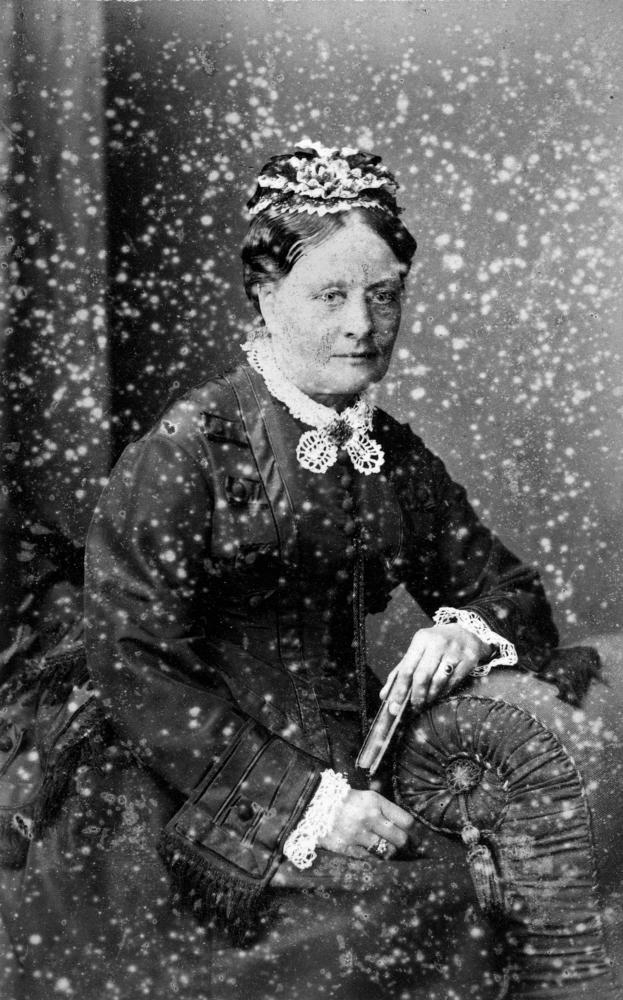
Martha Malbon
Martha’s husband William was the son of the distinguished Captain Micajah Malbon of the Royal Navy,[5] and the Governor of the Stapleton Depot for French prisoners of war.[6] William had arrived in the colony of NSW in 1850 and may have formerly been a soldier,[7] and he seems to have had good social connections within the colony for he was the cousin of John Thompson, the Deputy Surveyor General.[8]
William was involved in some capacity with the construction of the dry dock at Cockatoo Island, but was then employed in 1853 to oversee an unsuccessful attempt to sink a bore at Darlinghurst Gaol in order to supply Sydney with water.[9] He became unwell and the project came to a standstill. Around 1856,[10] William and Martha settled at Dapto, NSW, where William farmed on a property called Sunny Bank which was owned by the Rev Richard Allwood who was the minister of St James, King Street, Sydney. They remained at Sunny Bank until September 1861,[11] after which time their whereabouts and activities are difficult to establish with any certainty. In July 1862,[12] a William Malbon was appointed as acting Sub-Inspector of Police,[13] later being appointed as a Sub-Inspector.[14] As Malbon was not a common name in the colony this is probably Martha’s husband. He served at Eden and Moruya, Berrima and later in the Clarence region,[15] and his time spent with the police ended in 1866[16] when his appointment was terminated. It appears that William’s efforts, which were said to be high-handed and alienating, were not well received by the communities he was called to serve.[17] William resurfaced in 1870 having been appointed, upon the death of Thomas Smith, as Secretary of the Pyrmont Bridge Company.[18] This appointment ceased when the Pyrmont Bridge was sold to the NSW Government in 1884.[19]
William was an experimenter and inventor, but not one who succeeded commercially. In 1857, he was exhibiting examples of products made from Sorghum Saccharatum or Chinese sugar plant at the Agricultural and Horticultural Society (treacle, sugar and bran), and at the 1857 Dapto Agricultural Show he exhibited examples of colonial cochineal which he had produced.[20] At the Illawarra Agricultural Show the following year, he produced a broom for sweeping which he had manufactured from the sorghum plant. In addition to this, he also exhibited lucerne, rye-grass and clover seeds, and some wine which was considered worthy of a special prize. Malbon showed himself to be innovative, spirited and skilful in such experiments and production, but does not seem to ever have produced anything of continuing commercial value. Later, he was to announce a breakthrough in producing fire-proof wood[21] as well as a Non-Deviating Compass for Naval use.[22] The value of both these ‘inventions’ was disputed at the time by others and again never seem to have produced any commercial return. While William’s position as Secretary of the Pyrmont Bridge Company would have produced some income it would seem that he was an experimenter and inventor at heart, but not a great financial provider and at his death in 1890, his estate was only valued at £226. Martha’s position as Matron of the Female Refuge would have been welcome as it would have provided her with extra income. She was initially paid around £65 per annum which increased to £100 per annum in 1875, and she was also given housing.[23]
Martha was appointed Matron of the Sydney Female Refuge in March 1870.[24] The previous matron, a Mrs Wait, had resigned and in early 1870 the committee was advertising for a replacement.[25] The appointment was clearly in the hands of the Ladies Committee of the Refuge as applications were to be addressed to the (more…)
Teachers of the Ragged Schools
The Misses Bowie: Louisa (1834-1884), Jessie (1836-1906), Catherine (1838-1918), and Elizabeth (1840-1922); Isabella Brown (1858-1932), Fanny Owen-Smith (1859-1932) and Violet Paterson (1871-1948)
The Misses Bowie, Isabella Brown, Fanny Owen-Smith and Violet Paterson who taught in the Sydney Ragged Schools, are examples of the dedicated, female, vocational philanthropists of the nineteenth and early twentieth centuries. While they gave a lifetime of devoted service to the Ragged Schools, they have hardly left a mark on the historical record of the times. This was not because their work was insignificant, but because official reports and newspaper accounts of the day gave much more attention to the governance and financial philanthropists of the charity and gave little mention to those who did the actual work of the organisation. Because of this lack of attention, their work and contribution has largely gone unrecorded and uncommented upon, and the paucity of sources makes this difficult to adequately redress. (more…)
Catherine (Kate) Gent nee Danne (1835-1899)
Catherine (Kate) Gent nee Danne (1835-1899), Teacher and Vocational Philanthropist
A ‘Mr and Miss Danne’ were involved in the Ragged Schools of Sydney as part of a philanthropic attempt to assist the children of the poorest to gain some education and improve their situation in life. They were what might be termed ‘vocational philanthropists’ for they did not give financial support, other than by forgoing more lucrative employment, nor did they serve as committee members overseeing the work. Rather, they were employed by the committee to interface with the poor, assisting the parents and teaching their children, and the level of Miss Danne’s commitment and sacrifice meant that this employment was her vocation. They were both associated with the Ragged School as teachers and Miss Danne was appointed to the paid staff in October 1860[1] to teach the girls and to support Henry B Lee, the one paid male teacher.[2] With Lee’s departure around May 1861, a Mr Danne was appointed to replace him.[3] His salary was 30 shillings per week, while with his appointment, the salary of Miss Danne was increased from 30 shillings to 40 shillings per week.
So who were ‘Mr and Miss Danne’ of the Ragged School? The answer to this question is not immediately apparent as contemporary accounts refer to them simply as ‘Mr and Miss Danne’. The Danne Family, consisting of William Danne (more…)
Henry Brougham Richard Lee (1831-1883)
Henry Brougham Richard Lee (1831-1883) The City Night Refuge and Soup Kitchen Manager
The name of Henry Brougham Richard Lee, abbreviated to H B Lee, became synonymous with the work of the Sydney City Night Refuge and Soup Kitchen in the period 1868 to 1883. His great gift to the organisation was not just his ability to relate to the ‘down and out’ of the community, but his skill in convincing merchants and business people to donate goods and food stuffs to this philanthropic work.
Lee was born at Finsbury, England, on February 26, 1831, to a shoemaker named Thomas Lee and his wife, Sarah Beal, and he came to the colony of NSW on the Plantagenet, arriving in July 1853. In 1860,[1] he married Harriet Miller (1833-1878) and they had four children: Florence Mary Ann (1861-1909), Eveline Maud (1863-1937), Grace Hannah (1865-1867) and Alfred Ernest (1869-1953). It appears that Henry ‘had the misfortune to be deformed and short of stature’,[2] but this did not impede him as he was frequently described as being energetic and indefatigable. In England he had been apprenticed to a nautical instrument maker,[3] and went into partnership with Thomas Drinkwater in 1854 after his arrival in Sydney.[4] They operated as Drinkwater and Lee, engineers who specialised in brass fittings, but the partnership was short-lived and was dissolved in April 1856.[5] This was to be the first of a number of such short-lived and unsuccessful business and professional positions in which Henry was involved.
In January of 1856, Lee published the first volume of The Australian Band of Hope Review and Children’s Friend which was a journal for the promotion of temperance.[6] It was to be published fortnightly, cost three pence, and was to be a children’s magazine consisting of anecdotes, stories and poetry, and often promoting the temperance message. Over time, it changed its emphasis from children to a more general audience and changed its title to The Australian Home Companion, but it remained a temperance advocate. Whatever else the newspaper may have done, it had the distinction of being the first newspaper to publish a Henry Kendall poem in February 1859.[7] The poem was entitled ‘Oh Tell Me Ye Breezes’ and was on the disappearance of Ludwig Leichhardt, the explorer.[8] It is clear the newspaper was not a commercial success for as early as 1857, after only fourteen months of publication, it was in trouble as its circulation was just 1,000 copies. The paper was barely covering its expenses and attempts were made by the public to raise £100 to defray its expenses.[9] By October 1859, the circulation had increased to 1,900 but the paper still struggled financially. Lee remained the proprietor until December 1860 when he was forced to sell the paper to cover his debts.[10]
In 1860, Henry became the first teacher for the Sydney Ragged School, the school founded by Edward Joy. Joy had advertised for a special sort of teacher who was more than just a teacher of reading and writing, but also someone who ‘has a truly Christian interest in the welfare of the class of children for whom the school is intended and who has at the same time the gift of winning the attention and securing the affection of such children.’[11] Lee[12] was engaged as a teacher and his (more…)
John Kent (1843-1916)
John Kent (1843-1916), Accountant and YMCA supporter
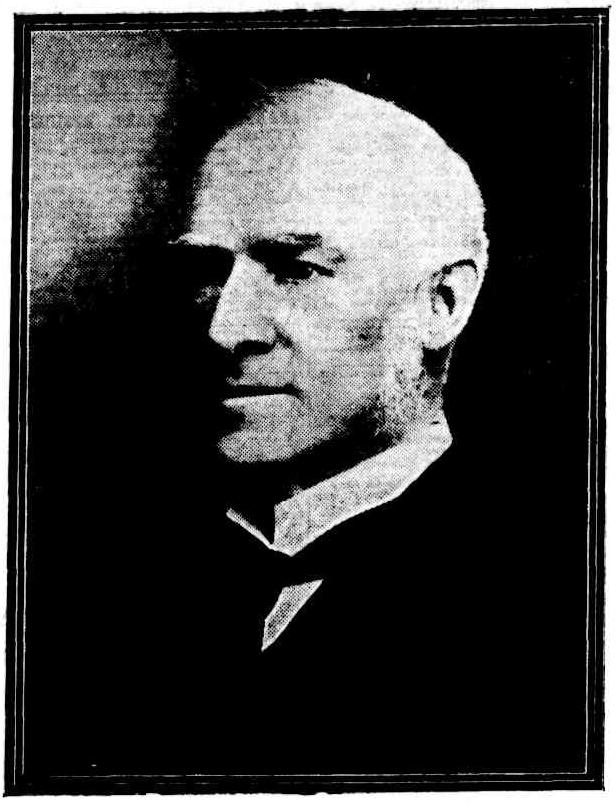
John Kent
John Kent was born in 1843 in Hinton Waldrist, Berkshire, England, the son of John Kent, a farmer with some 435 acres and employing 15 labourers, and Jane Gee. John was the fourth child and the eldest son among seven children. Around 1860, John left the farm and at 17 was placed under a private commercial tutor for special training in accountancy and commerce, possibly in connection with the drapery business.[1] After gaining experience in a solicitor’s office that specialised in bankruptcy, further work in private banking and then in a sales department of a warehouse in London, he decided on a commercial career in Australia.[2]
Kent arrived in Sydney in 1863[3] and obtained a position with the drapers and silk merchants Francis Giles and Co and by September 1864, the company had been placed in the hands of administrators as its debts were twice its assets.[4] This experience provided John with a personal understanding of company insolvency, and this proved very useful for his later business career which involved overseeing and administering such insolvencies. His employer’s business was bought by John Thompson and continued to trade under the name of Francis Giles and Co with Giles as manager.[5] It is possible that Kent retained his job despite the difficulties, but may have left after a fire destroyed the business in 1867.[6] Kent’s obituary says cryptically that after his time at Francis Giles and Co he spent some time in the country and then, after three years, ‘resumed his business career’.[7] It is probable that he spent some time, at least up to 1869, as an ‘Episcopalian catechist’ in the Kurrajong/North Richmond area.[8] During his time there he was involved in public controversy over the abandonment of denominational schools and the commencement of public ones. Kent was concerned that the public education system would not allow the scriptures to be taught within it, a concern he maintained throughout his life. On his return to Sydney he began work for W Gardiner and Co who ran a soft goods warehouse, a similar line of business to his former employers.[9]
In 1871, John married Helen Clayton (nee Felton) (1828-1902), a widow with two daughters Elizabeth (1856-1916) and Catherine (1857-1913), and John and Helen had one son, Walter John (1872-1873), who died at eight months and three weeks.[10] Initially living in Francis Street, Sydney (1871-1879), they began to move with the increasing success of John’s business. They moved first to Marlborough Street, Leichhardt (1880-1883), then to Marion Street, Leichhardt (1884-1897), followed by O’Hara Street, Marrickville (1898-1904) then, after Helen’s death, John moved to Union Street, North Sydney (1905-1910) followed by a final move to Cleveland Street, Wahroonga (1911-1916).[11] At least from 1888, Kent also owned a country residence, farm and orchard of some 445 acres at Barber’s Creek, later known as Tallong.[12] Here he planted apples with a view to exporting them to England[13] which he did from 1892,[14] for he correctly foresaw that England could become a major market for the export of Australian fruit.[15]
David Walker (1839 -1915)
David Walker (1839 -1915) Secretary of Sydney YMCA and vocational philanthropist
The YMCA (Young Men’s Christian Association) became in NSW in the last quarter of the nineteenth century a very significant youth organisation. Prior to this it was not always so successful and had for a long time struggled to exist. Its resurgence was due, humanly speaking, to David Walker.
David Walker, son of Samuel and Ellen Walker, was born in Londonderry, Northern Ireland, on November 8, 1839, and died in Sydney on January 20, 1915, aged 75. He had begun a clerical commercial life in Ireland but, attracted by the gold rush, he came to Australia in 1856 when he was seventeen. His brothers John (1826-1906), an engineer on the City of Sydney[1] and William (1836-1916), an employee of the Commercial Bank,[2] were already in Australia having arrived shortly before him.[3] After the death of their father in 1866, their sister Rebecca (1847-1928) joined them in Sydney in 1867.[4] David, although attracted to the colony of NSW by the gold rush, was to say
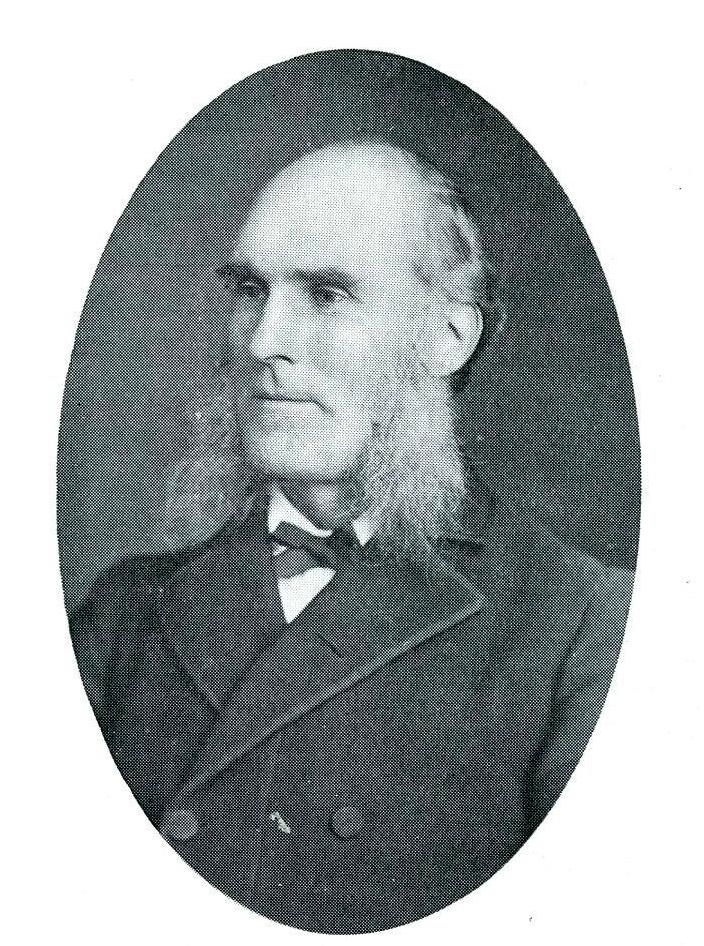
DAVID WALKER
General Secretary
Sydney YMCA
1878-1902
that ‘he found something better than gold’, a wife and a greater sphere of usefulness than he had ever contemplated.[5] In 1865, David married Emily Jane Smalley and they had eight children: Edith Annie (1867-1950), Mary (1869-1930), David Edgar (1871-1948), Emily Gertrude (1873-1952), Robert Percy (1874-1951), Jessie Helen (1876-1950), Grace Millicent (1884-1965) and Eric John Kent (1887-1952).[6] From at least 1870, they made their family home in the Petersham Marrickville area,[7] only moving to Killara in 1905.
It was said that David entered the firm of Barnett and Hinton, wine and spirit merchants,[8] as a junior clerk and became chief book keeper and confidential clerk[9] after 21 years of service, then continued to work as an accountant for the firm until 1878.[10] This narrative implies a stable and steady progression of continuous service with one company, but this is a colourless and misleading account of his commercial life. In fact he worked for a succession of firms, all of which were in the business of wholesale grocery and wine and spirit distribution, and it is clear that being a wholesale grocer in nineteenth century NSW was a difficult and challenging business, as demonstrated by the numerous insolvencies and dissolutions of partnerships that occurred. David was fortunate, however, for through each crisis he was given employment by the succeeding partnership. He seems to have commenced his commercial life with JV Barnard and Co, wholesale grocers and wine and spirit merchants which had been formed in 1854. In 1860, the business became insolvent and was dissolved,[11] and Barnard then formed a partnership with Alfred Haydon to form Haydon and Co which was renamed Alfred Haydon and Co.[12] This particular partnership was dissolved in 1865,[13] but the company continued under its name until there was an amalgamation with Watkins and Leigh, and Barnard and Burrows was formed in 1866.[14] In 1872, this partnership was dissolved and Barnard and Hinton was formed.[15] By 1877, due to difficult financial conditions in country NSW, Barnard and Hinton found themselves with many clients who could not meet their financial obligations and trade was slack. This forced the company into liquidation and administration, paying only ten shillings in the pound to its debtors.[16] In January 1878, Hinton purchased the residual of the business[17] and resumed trading under the name of Hinton and Co, Wine and Spirit Merchants and Importers.[18] Over this time and throughout all these commercial upheavals, David maintained his employment with each succeeding partnership which demonstrates that he must have been a vital and well-regarded employee.
It was in 1877 that Walker was presented with a requisition, signed by 420 people, to consider the full-time role of General Secretary of the Young Men’s Christian Association (YMCA).[19] This was not the first time he had been (more…)
Sharp Hutchinson Lewis (1830-1921)
Sharp Hutchinson Lewis (1830-1921), Glover and an early Secretary of the YMCA Sydney
Sharp (Sharpe) Hutchinson Lewis was born in 1830[1] at Ramsgate, Kent, England, the son of John Lewis and Ann Hutchinson and died September 6, 1921, at Petersham, Sydney, Australia. In 1858, he married Mary Morshead Gypson[2] and together they had five children: Mary Ann (1859-1937), William Arthur (1861-1955), Mortimer Kent (1866-1867), Agnes Fanny (1868-1941) and Lillian Eleanor (1870-1932). Before his marriage, Sharp was employed as a Clerk with the London house of the Sydney firm of David Jones and Co in Fenchurch Street when it was decided he should go to NSW to join the company’s staff in Sydney.[3]
Lewis arrived in Sydney in 1854 and went to work with David Jones and Co as planned. In January 1857, Jules Pillet, a highly successful glover at 10 Hunter Street, advertised that he wished to retire and was willing to dispose of his business, The French Glove Depot, with a lease of his premises for six years.[4] On January 1, 1858, Sharp took over the business which, despite some early financial difficulties,[5] he ran successfully for some 16 years. The shop was considered ‘a very fashionable place’ and was just opposite where Henry Parkes had his shop. Sharp said of Parkes that ‘many a chat I used to enjoy with him in those days. He was a clever fellow’.[6] In 1861, Sharp opened a
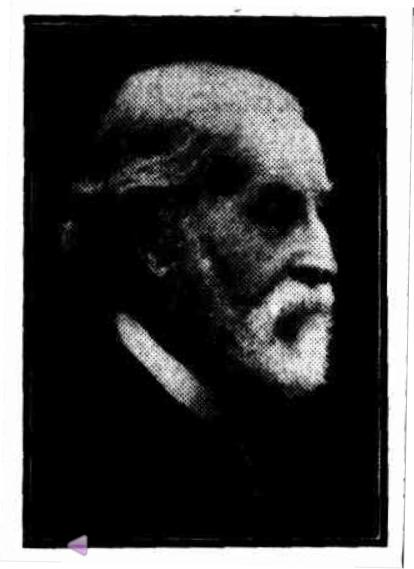
Sharp Hutchinson Lewis
branch in Brisbane advising his customers that he had made arrangements with his predecessor, Jules Pillet, to select the stock which covered a wide range of quality goods from gloves and umbrellas to haberdashery in Paris and London, ensuring thereby that ‘nothing would be lacking in taste and quality’.[7] He finally disposed of the business to his sister Frances Johnson (nee Lewis) and his assistant Edward Carroll in March 1874.[8]
Lewis later accepted an invitation from James Woodward[9] to return to the firm of David Jones, but he did not remain long with his old employer for in 1879 he sold the family home ‘Kentville’ in Petersham for £1,100[10] and went, it was said, on an extended trip to England.[11] But this information is incorrect as he, his wife and three of his children, went to live in Dunedin, New Zealand,[12] where he worked for Hallenstein Bros and Co at the New Zealand Clothing Factory[13] as an Inspector of Branches.[14] During his time in Dunedin, he involved himself in the local YMCA as a committee member[15] and also became the secretary of a company to set up a Coffee Palace which sought to ‘combine all the advantages of (more…)
The Commencement of the Sydney YMCA
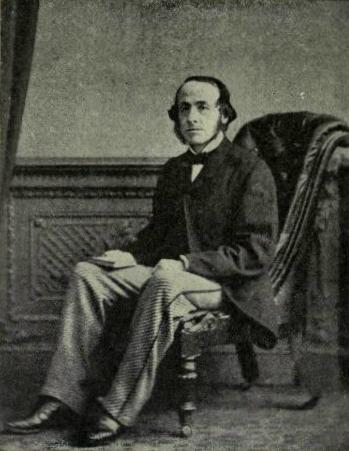
George Williams
founder of the Young Men’s Christian Association (YMCA) in England
The Commencement of the Young Men’s Christian Association, Sydney (YMCA)
In June 1853, a letter appeared in the Sydney Morning Herald (SMH) encouraging the formation of a YMCA along the lines of that which existed in Great Britain and in Melbourne. This was the first intimation that plans were afoot to commence such a work in Sydney.[1] It seems likely that this anonymous letter was the product of conversations between Samuel Goold, John Mills and John Joseph Davies about the importance of forming a branch of the YMCA in Sydney. In July 1853 and through an advertisement, Samuel Goold sought a copy of the rules and regulations of the YMCA of Great Britain because a similar organisation was soon to be formed in Sydney.[2] The first meeting of the Association was chaired by Goold and was held at his house on the corner of Pitt and King Streets and it continued at this venue for some time.[3] The YMCA prospectus was published on the front page of the SMH in September of 1853 under the Presidency of John Fairfax and with no less than 18 clerical vice presidents. Their presence was designed to indicate the support of the protestant Christian churches and to show that the new organisation would be no threat to them. The treasurer was James Comrie, John J Davies was the secretary and it had a committee of fifteen.[4] The motivation for forming the organisation was
the great want observed to exist here by many persons who are anxious for the moral and intellectual advancement of this country and felt especially by young men who earnestly desire to keep pace with the march of the mind in our Fatherland, seems to be the absence of those helps and guides, and means of improvement, which seek an apparatus as the present Association is calculated to afford.[5]
The organisation was officially inaugurated in Sydney, with its first public meeting on October 5, 1853, and with a lecture given by the Rev George King.[6] It was the arrival of Sharp Hutchinson Lewis and his appointment as Secretary that proved to be critical to the survival of the YMCA at this stage of its life. In London and (more…)
Charles Nightingale (1795-1860), Edward Ramsay (1818-1894) and James Druce (1829-1891)
Charles Nightingale (1795-1860), Edward Ramsay (1818-1894) and James Druce (1829-1891) Charity Collectors
Obtaining funding for the work of the various nineteenth century philanthropic organisations was always a challenge. There was little government financial assistance available, and the various organisations were dependent upon the generosity of the public for financial support. In order to gain that support the many charities who wished to collect money from the public engaged in a number of activities and strategies. Prominent among their activities was the public annual meeting, often chaired by a socially important person, where the activities of the organisation were reported and supportive resolutions passed. At the meeting someone, usually the secretary of the committee, would read a report detailing what had been achieved in the year past, often giving encouraging examples of success as well as underlining the difficulty of the task which the charity had undertaken. Such reporting made the committee that ran the charity accountable to the public and to its subscribers. It also showed what had been achieved through public financial support, educated the community on the continuing need for the charity, and gave hope for success in the future so that there might be continued interest and increased financial support given by individuals.
Nineteenth century newspaper editors, at least up until the 1890s, gave very sympathetic treatment to such organisations and often printed extensive reports of the meetings which gave further publicity. Printing the annual reports of these organisations and circulating them to their subscribers was also a vital part of the strategy. Such documents contained the secretary’s report, a financial statement, the lists of subscribers and the amount of their subscription, and newspapers often printed subscriber and donation lists as well. It has been suggested that the existence of these subscriber lists is evidence that nineteenth century philanthropy was a morally approved way of self-aggrandisement.[1] Motives are difficult to determine and it may well be that, for some, giving was motived by being seen to have done the ‘right societal thing’ or by a desire to gain praise for the size of a donation. For others, however, such support was undoubtedly a response to need and a desire to help without any ulterior motive. From the organisations’ point of view, it was an effective means of giving a receipt and perhaps a means of encouraging (more…)
Joseph Paxton (1828-1882)
Joseph Paxton (1828-1882) Miner, Musician, Philanthropist and Churchman
Joseph Paxton was, to a remarkable degree, both a financial and a governance philanthropist. He was born on 10 May 1828 at Dunbar, Scotland, to James a journeyman boot maker and Margaret (nee Greig) Paxton. Though a brass founder by trade Joseph was a gifted singer and musician and he taught music and also led the singing in one of the Edinburgh churches for some six years.[1] He married Elizabeth Bennett in 1853 and they left for the colony of NSW arriving in Sydney in early 1854.[2] Their daughter Margaret born in 1854 died in 1855 but two further children, James Alexander (1856) and Elizabeth Bennett (1860) were born to the family at Tambaroora (Hill End).
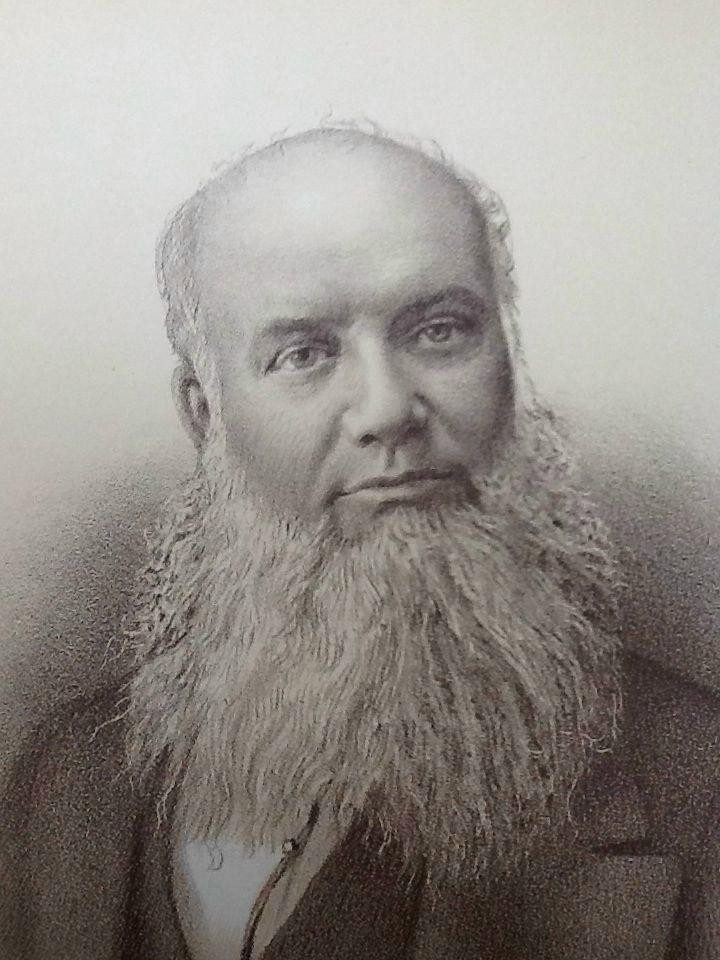
Joseph Paxton
The Entertainer
Initially Paxton earned a living in Sydney by giving performances of Scottish Songs and he also toured giving concerts in the Hunter Valley. His singing was appreciated and was compared in style to the famous Scots singers Wilson and Templeton with ‘interest being sustained by anecdotes and explanatory remarks illustrative of the songs’.[3] It would appear that Joseph, as an entertainer, was comfortable being a public figure and throughout his life was willing to express his opinions on various subjects. These public skills and attitudes would later lead him to often be chosen to chair public meetings of various organisations.
The Gold Miner
In late 1854 the family left for the Gold Diggings on the Turon River in NSW where Paxton took up a miner’s right on Hawkin’s Hill at Hill End.[4] By 1866, Paxton entered a partnership with William Holman and some others to form Paxton, Holman and Co whose purpose was to mine a claim on Hawkins Hill.[5] There were some 32 men employed on the site working both day and night and probably six days a week and after thirteen months of extremely hard work the first ore was crushed in March 1869. In the period June 1870-May 1871 the mine was producing some £16,000 (approximately $2 million current value) worth of gold[6] and the value of the area was shown when, in 1872, one nugget was found which on its own was worth £16,000.[7] Paxton was involved in numerous other mining ventures and partnerships at Hill End[8] as mining required considerable capital to exploit the deposits. There were 255 Companies on the Hill End goldfield in 1872-1873 and they had a combined nominal capital of £3,673,937 of which Paxton’s company was the biggest by far with a nominal capital of £160,000.[9] As a miner and mine owner, Paxton was concerned for the safety of mining and was part of a deputation to the Minister for Lands to seek the appointment of a mines inspector for gold mines. He said that many accidents which had taken place on the gold-fields were due in many instances to the incompetency and utter ignorance of men appointed by boards of directors as mine managers.[10] He had no patience with those mine owners and companies that cited cost as a deterrence to the appointment of a mines inspector for such miners who were under capitalised had no right to exist if they did not have the funds to protect the lives of their men.[11] He thought that by such an appointment the Government might incur the displeasure of some but would at the same time earn the gratitude of thousands of miners.[12] (more…)
Edward Joy (1816-1898)
Edward Joy (1816-1898) Pastoralist and Ragged School Philanthropist
Edward Joy was born on 18 June 1816 in Leeds, England, the second son of William Thomas Outhwaite Joy (1785-1855) and his wife Harriet Glover. William, who had been an apprentice and journeyman with Mr Medley, a Leeds Chemist, Druggist and Oil Man, set up business on his own as a seed and oil merchant in 1807.[1] Later, William entered into partnership with his brother Edward, after whom his son was named, and operated the Thwaite Mills near Leeds in a partnership that was eventually dissolved in 1844.[2] William and Edward then each formed a partnership with their own sons. Unlike his family, Edward Junior, as he was known in Leeds to distinguish him from his very prominent uncle, did not remain in the seed and oil business,[3] but became the manager of the New Leeds Gas Company in 1841.[4] In 1843, Edward’s older brother William married Mary Holt[5] and in 1851, Edward married Mary’s sister Eliza.[6] The Joy and Holt families were thus closely linked in an association that Edward would continue in the colony of New South Wales (NSW) through his business partnerships with Thomas Holt,[7] his brother-in-law.
In 1853, Edward and Eliza set sail for the colony of NSW as first class cabin passengers on the Walmer Castle and arrived in Sydney on 12 September 1853.[8] Edward soon set up business in Sydney, utilising his Holt family connections by forming a partnership with George Stranger Leathes, trading as Joy and Leathes, for the purchase of wool for consignments for Lovegrove and Leathes of London and Holt Brothers of Leeds.[9] By 1856, this partnership was dissolved and Edward formed Joy and Company[10] with Andrew Hinchcliff, a partnership which also purchased wool and exported it to England. In 1862, the company was dissolved,[11] but Joy continued to send wool to England on his own account. Joy was also concerned with wool production and entered into several partnerships with Thomas Holt and others in the purchase of leases at Salisbury Plains in the Kennedy District, north of Rockhampton in Queensland.[12] In 1864, in a decision that would materially affect the course of his life Edward, together with Thomas Holt, advanced money to a lessee on Wealwandangie, a property in Queensland. The years 1866-1871 were years of serious depression in the industry with a drought being experienced in 1868, followed by floods in 1869.[13] The partnership with Holt had ended by 1870 after a dispute over Joy’s exercise of power of attorney while his brother-in-law was absent in England during 1866-1868.[14] This matter was the subject of litigation between Holt and Joy and, although it was eventually settled by mediation, it must have soured family relationships.[15] The end result was that Joy sold his share to Holt in 1870 for some £24,000 (in excess of $3 million current value)[16] and then returned to England.
While Joy was to spend only 20 years in the colony, during which time he acquired a modest fortune, he was to make a significant philanthropic contribution to NSW by his championing the cause of the Ragged School movement.[17] Edward and Eliza do not appear to have had any children of their own and they did not have any (more…)
 Philanthropists and Philanthropy