
Home » Posts tagged 'Thomas Walker'
Tag Archives: Thomas Walker

Walter Vincent: Funds, Fatigue and Fraud – an aspect of charity in nineteenth-century NSW
Walter Vincent alias Brown was a member of the opportunistic profession of the sweet-talking donation fraudster. He presented himself as a genuine collector of subscriptions for various charities, but he was not.
Obtaining funding for the work of the various nineteenth-century philanthropic organisations was always a challenge. There was little government financial assistance available, and the various charitable organisations were dependent upon the generosity of the public for financial support. To gain that support, the many charities that wished to collect money from the public engaged in a number of activities and strategies. Prominent among their activities was the public annual meeting, often chaired by a socially important person, where the activities of the organisation were reported and supportive resolutions passed. At the meeting, someone, usually the committee secretary, would read a report detailing what had been achieved in the past year, often giving encouraging examples of success and underlining the difficulty of the task which the charity had undertaken. Such reporting made the committee that ran the charity accountable to the public and to its subscribers. It also showed what had been achieved through public financial support, educated the community on the continuing need for the charity, and gave hope for success in the future, so that there might be continued interest and increased financial support given by individuals. These meetings were often widely reported in detail by the press, which devoted considerable space to them.
During the 1890s through to the first decade of the 1900s, the colonies of Australia experienced a severe economic depression. Businesses reported a slowness in trade, a drop in profits, the need to shed workers and in the case of many, through indebtedness and an inability to service loans, to declare bankruptcy. On the personal front, and as a result of reduced income, this meant less food on the table and less access to medical assistance if needed. There was an increase in unemployment as businesses, both large and small, sought to reduce expenditure in an attempt to survive the times.
(more…)Thomas Walker (1804-1886) Businessman, Banker and Philanthropist
Thomas Walker was, during his lifetime and at his death, widely praised as a great philanthropist. He was variously described as ‘the Peabody’[1] of NSW and as a ‘Man of Ross’.[2] Such designations comparing him to other famous philanthropists were underlined by his very large bequest given to build a convalescent hospital which came to bear his name. At his death, quoting Horace Mann, one tribute to Thomas recorded that
‘the soul of the truly benevolent man does not seem to reside much in his own body. It migrates into the life of others, and finds its own happiness in increasing and prolonging their pleasures, in extinguishing or solacing their pains’. Such a soul had Thomas Walker.[3]
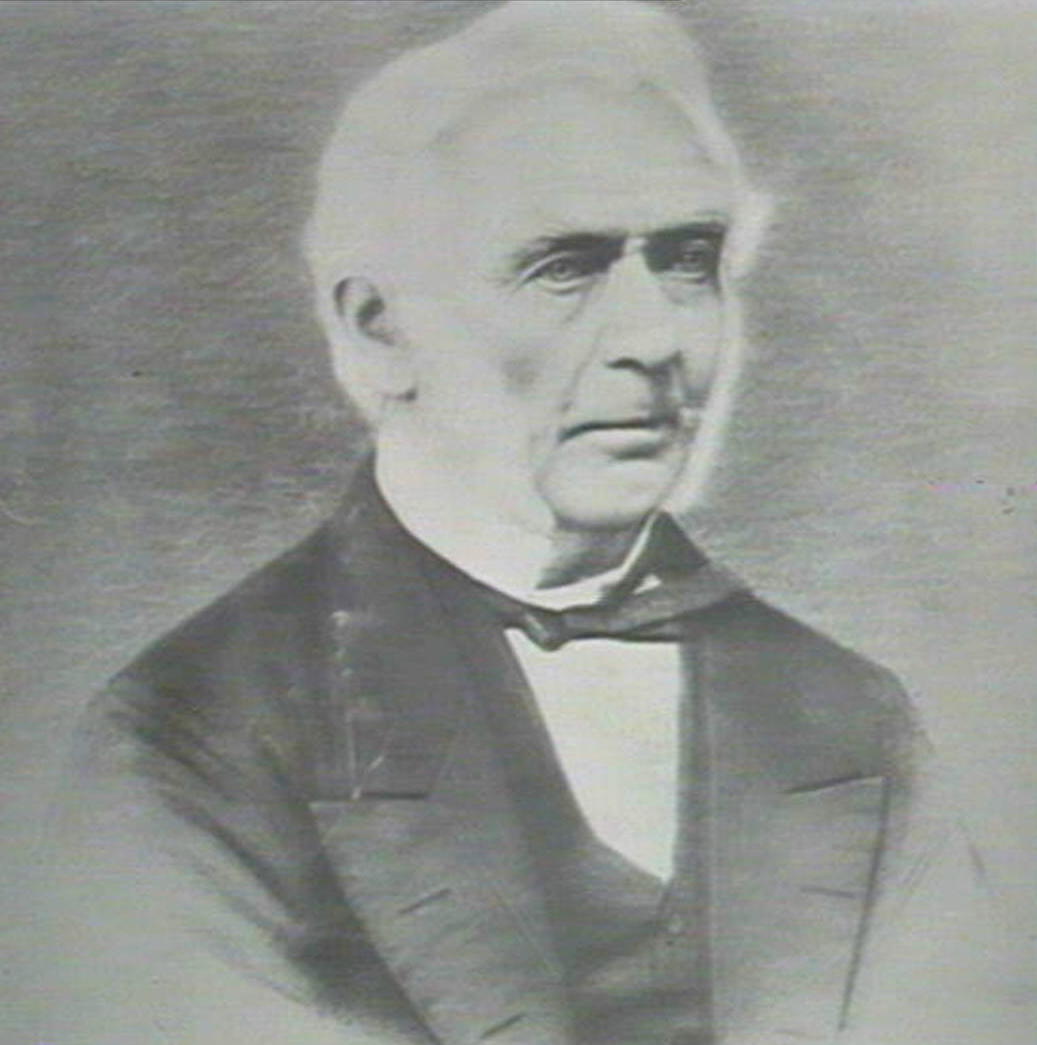
Thomas Walker
How philanthropic was the soul of Thomas Walker and how much did he migrate into the lives of others? While some attention has been given to his life, there has been little work done on that for which he is principally remembered and for which he attracted glowing praise: his philanthropy. Thomas was born on May 3, 1804, the elder son of James Thomas Walker, merchant, and his wife Anne, née Walker, of Perth, Scotland.[4] His birthplace is usually said to be at Leith, Scotland, and he was certainly baptised in the church at South Leith on July 29, 1804, nearly three months after his birth.[5] According to his marriage certificate, which is unlikely to be incorrect as Thomas himself probably supplied the information, he was actually born in England.[6] It would appear that at the time of his birth Thomas’ parents were resident there and later returned to Leith where Thomas was baptised.
Business
Thomas came to Sydney in April 1822 on the Active when he was 18 years of age[7] and brought some family capital with him as, on his arrival, he deposited £2000 in the Bank of New South Wales.[8] He joined his uncle William’s business, Riley and Walker,[9] and by 1829 was a partner with his uncle and Joseph Moore in the firm of William Walker and Co.[10] Later, his younger brother Archibald,[11] who had arrived in the colony in 1832,[12] joined the partnership[13] and both Thomas and Archibald remained as partners in the firm until 1843.[14] Archibald returned to England, but Thomas remained in the colony and upon retiring from the company kept some of his capital invested with it. William Walker and Co had wide business interests as merchants, ship owners and pastoralists, and was a largely successful and profitable business which negotiated the uncertainties of colonial economic life and conditions. The depression of the 1840s was a particularly difficult time for the company and by 1849 Thomas had become insolvent.[15] That he, by the time of his death, had the wealth he had was a remarkable achievement and business recovery which was assisted by the diversity of his financial interests.[16] (more…)
 Philanthropists and Philanthropy