
Home » Posts tagged 'Mary Roberts'
Tag Archives: Mary Roberts

Walter Vincent: Funds, Fatigue and Fraud – an aspect of charity in nineteenth-century NSW
Walter Vincent alias Brown was a member of the opportunistic profession of the sweet-talking donation fraudster. He presented himself as a genuine collector of subscriptions for various charities, but he was not.
Obtaining funding for the work of the various nineteenth-century philanthropic organisations was always a challenge. There was little government financial assistance available, and the various charitable organisations were dependent upon the generosity of the public for financial support. To gain that support, the many charities that wished to collect money from the public engaged in a number of activities and strategies. Prominent among their activities was the public annual meeting, often chaired by a socially important person, where the activities of the organisation were reported and supportive resolutions passed. At the meeting, someone, usually the committee secretary, would read a report detailing what had been achieved in the past year, often giving encouraging examples of success and underlining the difficulty of the task which the charity had undertaken. Such reporting made the committee that ran the charity accountable to the public and to its subscribers. It also showed what had been achieved through public financial support, educated the community on the continuing need for the charity, and gave hope for success in the future, so that there might be continued interest and increased financial support given by individuals. These meetings were often widely reported in detail by the press, which devoted considerable space to them.
During the 1890s through to the first decade of the 1900s, the colonies of Australia experienced a severe economic depression. Businesses reported a slowness in trade, a drop in profits, the need to shed workers and in the case of many, through indebtedness and an inability to service loans, to declare bankruptcy. On the personal front, and as a result of reduced income, this meant less food on the table and less access to medical assistance if needed. There was an increase in unemployment as businesses, both large and small, sought to reduce expenditure in an attempt to survive the times.
(more…)Thomas Roberts (1805-1871) Missionary and Artist and Mary Roberts (1808-1890) Matron, Sydney Female Refuge
On November 10, 1852, Thomas Roberts, a portrait painter,[1] and his wife Mary (nee Griffiths) arrived in Melbourne with seven of their children on the Hope to begin a new life in Port Phillip.[2] The children were Samuel (20), Ellen (18), Sarah (16), Hartley (14), Elizabeth (5), Emma (4) and Walter (1).[3] Thomas was born in Denbighshire, Wales, and had spent a number of years in Manchester at least from the time of his marriage in 1830 until sometime before January 1846 when he and the family moved to London.[4] In Manchester, the family had been involved with the Welsh Calvinistic Methodist Church Chapel in Cooper Street.[5]
Thomas not only worked as a portrait painter, but he also served for several years as a London City Missionary[6] and, according to Thomas’ grandson, he received a ‘lay reader’s commission from the Bishop of London to act as a chaplain on board the ship’[7] on their trip to Australia. Thomas and also his two daughters, Ellen and Sarah, came to the colony under the auspices of the Colonial Church and School Society (CCSS)[8] whose purpose was sending out clergymen, catechists and school teachers (both male and female) to the Colonies of Great Britain and to British residents in other parts of the world.[9] Ellen, was appointed in charge of the St Mark’s Girl’s school Collingwood, and Sarah also worked for several years as a school mistresses in Melbourne.[10] The CCSS was formed from pre-existing Anglican Evangelical Societies (Newfoundland School Society and the Colonial Church Society) on January 1, 1851, and the Rev Mesac Thomas (afterwards first Bishop of Goulburn in New South Wales in 1863)[11] was appointed its Secretary.
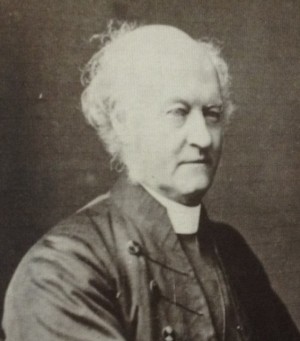
Bishop Mesac Thomas
HTTP://WWW.ANGLICANCG.ORG.AU/
 Philanthropists and Philanthropy