
Home » Presbyterian
Category Archives: Presbyterian
Lady Lucy Forrest Darley (1839-1913), social position, charity and a glass of champagne
Lady Lucy Forrest Darley nee Brown(e) (1839-1913)[1] was born in Melbourne, the sixth daughter of Sylvester John Brown(e) (1791-1864) and Eliza Angell Alexander (1803-1889). On 13 December 1860, she was married in London to Frederick Matthew Darley, the eldest son of Henry Darley of Wingfield, Wicklow, Ireland.[2]
On 18 January 1862, she and her husband and a servant left Plymouth on the Swiftsure and arrived in Hobson’s Bay (Melbourne) on 19 April 1862. Six weeks later, on 1 June 1862, Frederick was admitted to the New South Wales bar on the nomination of John Plunkett QC.[3]
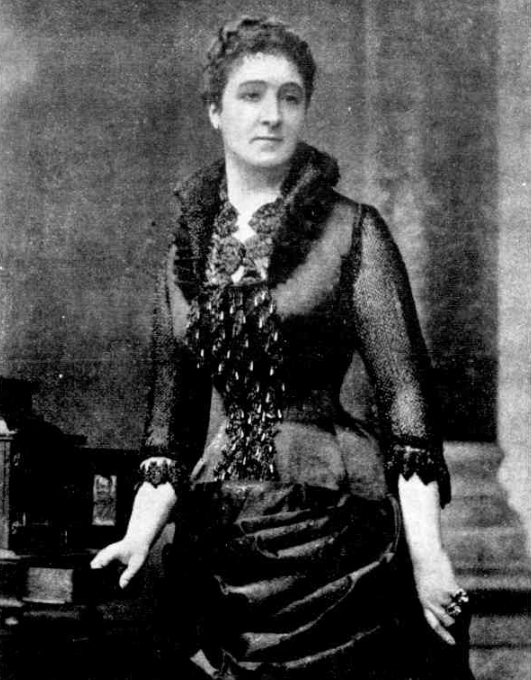
The Sydney Mail and New South Wales Advertiser
30 Mar 1895, 643.
Lucy was to have six daughters and two sons. Henry Sylvester (1864-1917), Olivia Lucy Annette (1865-1951), Corientia Louise Alice (1865-1951), Lillian Constance (1867-1889), unnamed female (1868-1868), Cecil Bertram (1871-1956), Lucy Katherine (1872-1930) and Frederica Sylvia Kilgour (1876-1958). She sadly experienced the loss of one daughter at birth in 1868 and another daughter, Lillian, died from typhoid in 1889 when she was 22 years old.[4]
Lady Darley was active in charitable and philanthropic work and was a founder of the Fresh Air League, and one of the first members and the first president of the District Nursing Association. She also helped to form the Ministering Children’s League in Sydney, was keenly interested in the School of Industry, the Mothers Union, the Queen’s Fund as well President of the Working and Factory Girls Club and of the ladies committee of the Boys Brigade.[5]
She had gone to live with her husband in London in 1909 and died there in 1913. Her obituary in the Sydney Morning Herald noted that, during the time Sir Frederick Darley was Lieutenant Governor of New South Wales (NSW), Lady Darley gave her hearty sympathy and support to many charitable and philanthropic objects.[6] One might gain the impression from this statement that her charitable and philanthropic efforts were coincident with her husband occupying the role of Lieutenant Governor of NSW. In other words, it could be suggested that her involvement and philanthropic interest arose largely from her social obligations as the wife of the Lieutenant Governor. Was this a fair summary of Lady Darley’s charitable efforts?
(more…)John Shedden Adam (1824-1906) Presbyterian and governance philanthropist
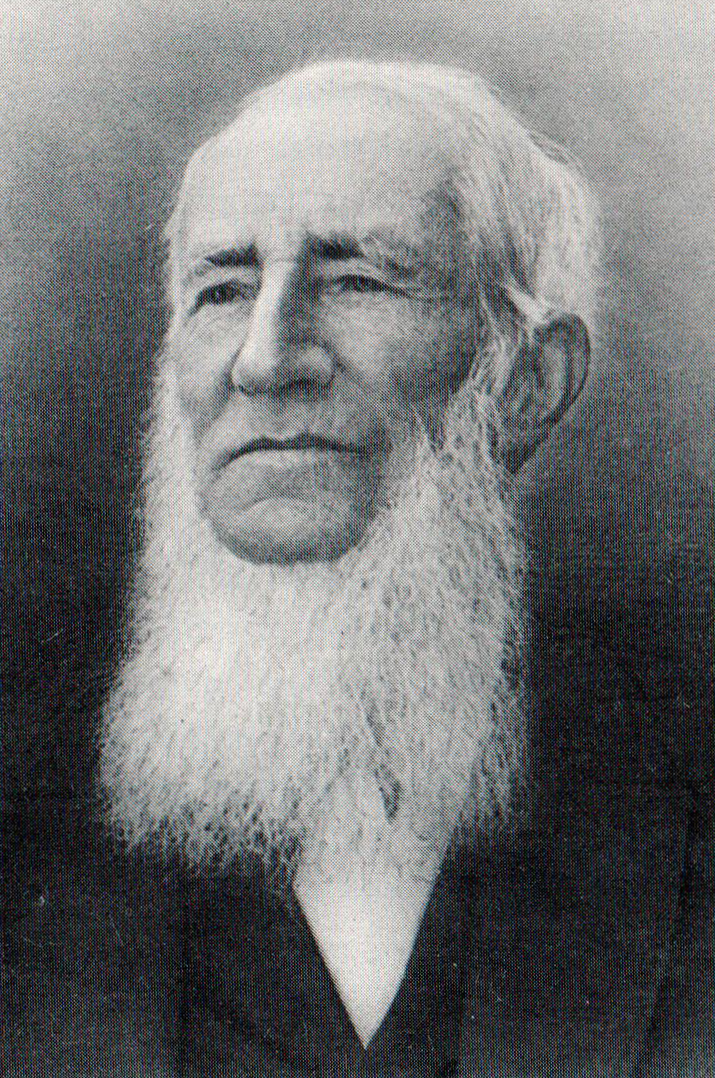
John Shedden Adam from Graham W Hardy, Living Stones, the Story of St Stephen’s Sydney
John Shedden Adam was born in 1824 in Stornoway on the Isle of Lewis, Scotland, to James Adam (1771-1849) and Janet Shedden (1788-1863).[1] James and Janet married on August 10, 1807, and they had eight children of whom John was the youngest son. John’s father was a man of many parts being an estate manager or factor, a land improver, a Writer to the Signet and the inventor of a screw propeller for naval ships.[2] James was originally from Lochwinnoch where he had a small property and in 1807 was appointed the factor on the great Drummond estate. On his own account, he was later involved in land improvement schemes at Barr Loch from 1813 until 1815; these proved a financial disaster.[3] Fortunately, by marrying into the Shedden family and through the wealth and generosity of Janet’s uncle, the Adam family did not face ruin and were later to inherit significant wealth.[4] These Barr Loch holdings were sold by 1820[5] and on quitting agricultural pursuits and leaving Garpel near Lochwinnoch, James practised as a Writer to the Signet (solicitor) in Edinburgh, a profession to which he had been apprenticed.[6]
Around 1821, James returned again to the role of factor (property manager) moving his family to Lewis where he worked for Mackenzie of Seaforth at least until 1826.[7] Around this date, he moved back to Edinburgh and recommenced his business as a Writer to the Signet.[8] John Shedden Adam, despite the strong family connections to Lochwinnoch where all his siblings were born and his relatives had significant landholdings, spent his childhood initially on Lewis and then from 5 years of age in Edinburgh.[9] He went to school at the Royal Naval and Military Academy, Lothian Road, Edinburgh.[10] This institution was commenced for the purpose of ‘affording education to pupils destined to serve in the army or navy, or East India Company’s service’. The Academy taught a range of practical subjects such as mathematics, science and engineering and languages but, importantly for Adam’s future work as a draftsman, it also taught landscape and perspective drawing.[11] In 1841, John was awarded the Master’s prize in senior mathematics and first prize in civil engineering.[12]
The Adam Family and New Zealand
By 1841, the extended Adam family had decided to seek their fortune in New Zealand. John’s brother James and his wife Margaret took passage to New Zealand on the Brilliant and arrived in October of that year. The Adam family had been convinced by the New Zealand Manukau and Waitemata Company to invest £1,200 in shares for land[13] and were led to believe that the wonderful city of Cornwallis was ready and waiting for energetic young immigrants, such as themselves, from Scotland.[14] The settlement was a disaster. Where settlers expected there to be a town there was nothing but wilderness, and they had been duped by exaggerated promises.[15] Sadly, the settlement leader, together with James Adam and several others, going on an errand of mercy to get medicine for a sick woman (Mrs. Hamblin, wife of the Missionary at Manukau) were drowned in November of 1841[16] and the plans of the Adam family were thrown into disarray.
David Walker (1839 -1915)
David Walker (1839 -1915) Secretary of Sydney YMCA and vocational philanthropist
The YMCA (Young Men’s Christian Association) became in NSW in the last quarter of the nineteenth century a very significant youth organisation. Prior to this it was not always so successful and had for a long time struggled to exist. Its resurgence was due, humanly speaking, to David Walker.
David Walker, son of Samuel and Ellen Walker, was born in Londonderry, Northern Ireland, on November 8, 1839, and died in Sydney on January 20, 1915, aged 75. He had begun a clerical commercial life in Ireland but, attracted by the gold rush, he came to Australia in 1856 when he was seventeen. His brothers John (1826-1906), an engineer on the City of Sydney[1] and William (1836-1916), an employee of the Commercial Bank,[2] were already in Australia having arrived shortly before him.[3] After the death of their father in 1866, their sister Rebecca (1847-1928) joined them in Sydney in 1867.[4] David, although attracted to the colony of NSW by the gold rush, was to say
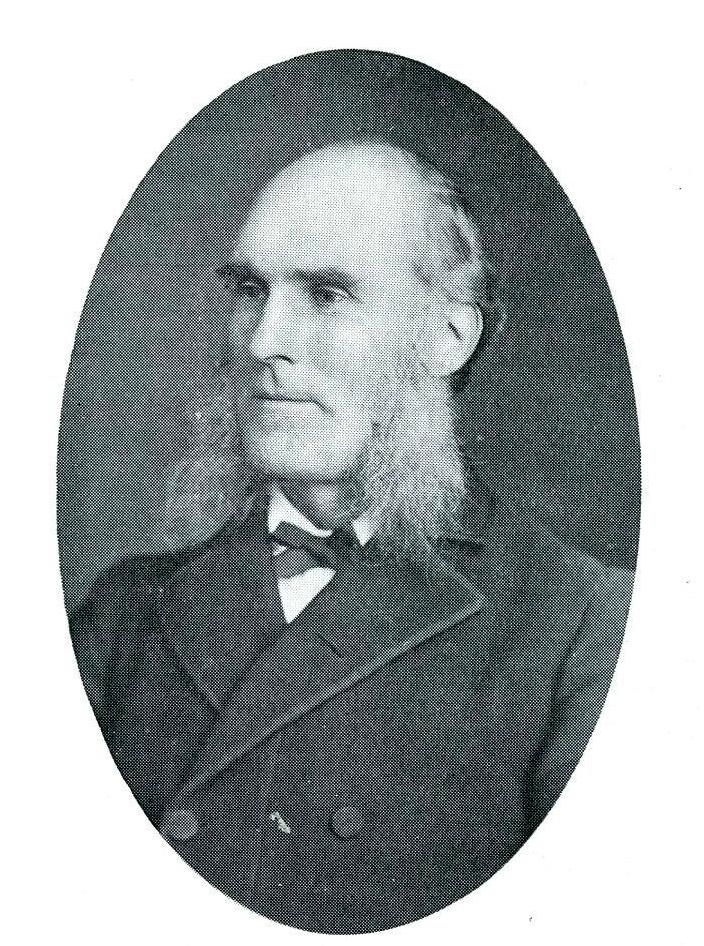
DAVID WALKER
General Secretary
Sydney YMCA
1878-1902
that ‘he found something better than gold’, a wife and a greater sphere of usefulness than he had ever contemplated.[5] In 1865, David married Emily Jane Smalley and they had eight children: Edith Annie (1867-1950), Mary (1869-1930), David Edgar (1871-1948), Emily Gertrude (1873-1952), Robert Percy (1874-1951), Jessie Helen (1876-1950), Grace Millicent (1884-1965) and Eric John Kent (1887-1952).[6] From at least 1870, they made their family home in the Petersham Marrickville area,[7] only moving to Killara in 1905.
It was said that David entered the firm of Barnett and Hinton, wine and spirit merchants,[8] as a junior clerk and became chief book keeper and confidential clerk[9] after 21 years of service, then continued to work as an accountant for the firm until 1878.[10] This narrative implies a stable and steady progression of continuous service with one company, but this is a colourless and misleading account of his commercial life. In fact he worked for a succession of firms, all of which were in the business of wholesale grocery and wine and spirit distribution, and it is clear that being a wholesale grocer in nineteenth century NSW was a difficult and challenging business, as demonstrated by the numerous insolvencies and dissolutions of partnerships that occurred. David was fortunate, however, for through each crisis he was given employment by the succeeding partnership. He seems to have commenced his commercial life with JV Barnard and Co, wholesale grocers and wine and spirit merchants which had been formed in 1854. In 1860, the business became insolvent and was dissolved,[11] and Barnard then formed a partnership with Alfred Haydon to form Haydon and Co which was renamed Alfred Haydon and Co.[12] This particular partnership was dissolved in 1865,[13] but the company continued under its name until there was an amalgamation with Watkins and Leigh, and Barnard and Burrows was formed in 1866.[14] In 1872, this partnership was dissolved and Barnard and Hinton was formed.[15] By 1877, due to difficult financial conditions in country NSW, Barnard and Hinton found themselves with many clients who could not meet their financial obligations and trade was slack. This forced the company into liquidation and administration, paying only ten shillings in the pound to its debtors.[16] In January 1878, Hinton purchased the residual of the business[17] and resumed trading under the name of Hinton and Co, Wine and Spirit Merchants and Importers.[18] Over this time and throughout all these commercial upheavals, David maintained his employment with each succeeding partnership which demonstrates that he must have been a vital and well-regarded employee.
It was in 1877 that Walker was presented with a requisition, signed by 420 people, to consider the full-time role of General Secretary of the Young Men’s Christian Association (YMCA).[19] This was not the first time he had been (more…)
 Philanthropists and Philanthropy