
William Henry Millwood Haselhurst (1842-1917) was the son of Samuel Haselhurst (1795-1858) a gold miner[1] and Elizabeth Ann nee Atkins, then later Hosken, (1810-1890).[2] He was born at Lane Cove River near Sydney in February 1842, and at three years of age he was taken by his parents to Adelaide and then to the Burra Burra Copper mines in South Australia.
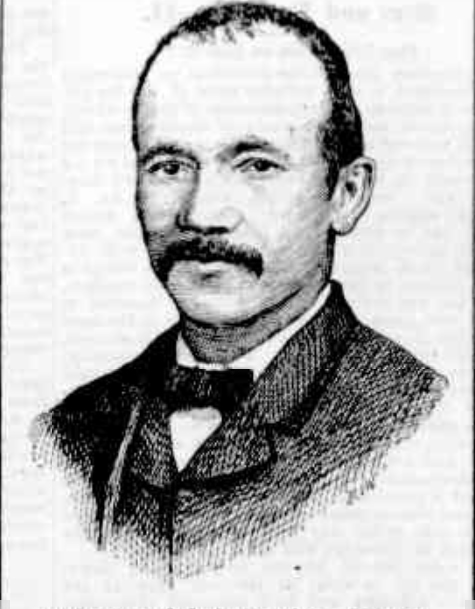
In 1852, the family moved to Bendigo, Victoria, where Samuel was involved in gold mining. This experience introduced William to what was to be his main interest in life – gold. He told the following story about himself:
In 1853, I was a boy of eleven years of age, living at Mount Korong, near what is now known as Wedderburn. One morning I was washing dirt in a tub at an old mullock heap in the eternal quest for gold. I might mention that the tub was made of an old flour barrel, and that our flour was imported from Valparaiso. My young brother was working with me, and we were intently engaged in our work when a company of the licence-hunters came along. The official stood and looked at me, then the sergeant gave the order. “March him off.” So I was marched off to the camp and charged with not having a licence. They evidently thought me trustworthy, because they allowed me outside the tent. For my dinner they gave me dumpling and sugar. In the afternoon my father called to interview the commissioner, who concluded I was too young to be compelled to have a licence, I was let off. Young as I was then, I remember that I fossicked out of a drive at the bottom of an abandoned shaft a nugget that weighed 3 oz. So perhaps the sergeant was right in thinking I should have had a licence.[3]
In 1858, Samuel died[4] and the family moved to Melbourne. It was here that William became a chemist’s assistant but then in 1867, aged 25, he tried his hand at gold mining.[5] He worked at various gold rush sites before eventually moving to Parkes in 1872 where he initially worked at various mining claims prior to striking out on his own. At this time, there was a great deal of gold being won from alluvial deposits, some 50,000 ounces between 1871 and 1878.
In 1883, after ten years of minor reward for his efforts, William sank a shaft of some 80 feet on the Bushman alluvial lead and discovered the Buchanan reef which was named after David Buchanan MLA, the popular member for the Goldfields. Initially, this was not a very promising find but after a great deal of work, carried out largely by himself as he did not work in partnership like most other miners, he eventually discovered a significant amount of gold. In less than three years at this site he won 6,528 ounces of gold from 1,388 tons of quartz and his total recovery of gold from the Buchanan was worth £60,000. In 1890, William sold the claim to the Haselhurst Proprietary Company for £20,000 while retaining a significant shareholding in the company of about 6,000 shares out of a total of 22,000 at £1 per share.[6] The negotiated terms of the sale were that on handover of the mine, Haselhurst would receive £10,000 cash with the balance to be paid out from gold won from the mine. After the takeover of the ownership of the mine gold production was so strong that the directors decided to pay out Haselhurst’s portion straight away, even though they had many years in which this could be done. Ironically, almost as soon as they paid out Haselhurst, the reef was exhausted[7] and in June 1892, the mine and its equipment was sold.[8]
Family
In 1885, William married Georgina Richardson Baptista Porter (1866-1944), the daughter of JB Porter, and they had four children: Violet (1886-1891), Arthur (1887), William (1889) and Elizabeth (1891). Tragically, in 1891, Violet their first child died of diphtheria aged 4 years and 9 months.[9] The remaining children attended St Joseph’s Convent School at Parkes and were well served by the education they received. Elizabeth excelled in music and gained an ALCM (Associate of the London College of Music {Performance & Teaching}); William Jnr attended Melbourne University where he studied law and chemistry and became a pharmacist; Arthur, after nine months of extra private tuition at the Convent School, passed the Law Matriculation Exam for Sydney University and later became a solicitor.[10]
Involvement in Parkes
The children were involved with St Joseph’s Convent School in its concerts and school prize-givings with the prizes often being supplied by William Haselhurst.[11] The Haselhursts were sufficiently community minded as to give their assistance to the efforts of various community groups to raise funds through fetes and bazaars. They assisted in Presbyterian, Anglican and the Convent school fetes as well as in the Roman Catholic Patriotic Bazaar. Both William, and particularly Georgina, participated in the various flower and agricultural shows held in Parkes. On one such occasion, it was said of their generous involvement that ‘The refreshment tent at the rear was provided and erected by Mr W Heselhurst who, with his genial wife, are ever ready to assist any worthy object’.[12] William became Patron of the local Cricket Club.[13]
Given the frequent family involvement with the Roman Catholic Convent, and with their support of the fund raising bazaars, one could be misled into thinking that the Haselhurst’s were Catholics. This, however, was not the case as William was in fact an Anglican. He was a Trustee of the Parkes Anglican Church[14] and when the Anglican bishop of the diocese was in Parkes he stayed at the Haselhurst’s.[15] William’s burial took place at the Anglican Cemetery.[16] Georgina’s mother was Roman Catholic but had married Protestants, and Georgina was a member of an Anglican Ladies Committee from at least for 1900 to 1902.[17] The children all attended the Convent School in Parkes, but the reason may simply have been that it was considered a better school than the Government School and would better prepare the children for professional lives.
Use of the Buchanan wealth
With his considerable wealth William was able to contemplate a comfortable life free from the hard labour of mining. He married, built houses and engaged in favoured pursuits. He bought a buggy and team of two thoroughbred horses, ‘Boarding School Miss’ and ‘Rowena’, which were used under harness but also won a few races for him.[18] He also owned at least two other race horses, one called ‘Highflyer’[19] and the other call Leura,[20] joined the Forbes Jockey Club[21] and also trained a race horse called ‘Orlando’.[22]
Haselhurst built two houses in Parkes; ‘Victoria Cottage’ in Court Street, perhaps built around 1887,[23] which was described as ‘the handsome house of Mr W Hazlehurst’[24] and later he built a two-storey mansion in Hill Street called ‘Buchanan’. Given that most of Haselhurst’s wealth derived from the Buchanan reef, the house name was a recognition of his wealth’s source and it was etched in glass below his initials ‘WHMH’ and over a doorway of the house. The ‘Buchanan’ was a tribute to his success and wealth and was built at what must have been considerable cost. It had a magnificent Goodlet and Smith stained glass window as a feature which contributed to the house being described as a very handsome residence[25] when it was completed in March 1894. Two years after the completion of the house, a mining journalist noted that the ‘Haselhurst mine’ which been so productive had untapped potential but was now left unworked and unused. He observed that,
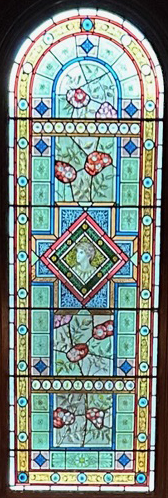
there is in the town a monument commemorative of its former greatness [that is of the mine] in the shape of a magnificent mansion, which had never been occupied. ‘Hazelhurst’s Folly it is called.’[26]
The journalist’s point was that if the money spent on building the ‘Buchanan’ had been spent on the mine then it would still have been productive, yet in June 1896 both mine and mansion were unoccupied. Since the house was said to be completed in March 1894 this comment, made two years and three months later, if correct, means that the house was not occupied for several years after completion.
Bishop Camidge of the Diocese, stayed a number of times with the Haselhurst’s when he visited Parkes and on his first visit in September 1898 he stayed at the ‘Buchanan’, Hill Street.[27] Concerning this visit the bishop said ‘he had never stayed in a more delightful house or received more kindly attention than in the house he was staying at during his visit (Mr. Haselhurst’s)’.[28] In 1901 and in 1904 on the Bishop’s visit to Parkes Camidge again stayed with Haselhursts though no specific reference is made to the location of the house.[29]
In 1903, the Buchanan was sold by Haselhurst to OJ Howard, but the conditions of the sale are unknown. The building would have cost thousands of pounds but was said to have been disposed of for £700;[30] it is unknown when the Haselhursts moved out. The Howards were in possession of the house by November 1903 as the local newspaper reported that the house had a new name and that Mr F Glading of Parkes had ‘recently finished Mr OJ Howard’s large two-story residence, “Balmoral House,” and his workmanship is most artistic.’[31]
Philanthropy
Given that William had become very rich and seems to have spent a great deal of it, he could have generously given a portion of his wealth to assist others. Haselhurst was not a talkative man and did not make comment about any giving he may have done. He supported the local schools, both Catholic and Public. He donated prizes and a flag pole for the public school upon which, as per Education Department instruction, the Union Jack was flown.[32] In 1889, he donated 10 guineas to the Forbes Hospital for which he became a life governor[33] and 10 guineas to the Bulli Relief Fund.[34] He and Georgina made modest donations of a guinea to the Asylum for Destitute Children, Randwick, in 1889, 1890, 1896 and 15 guineas for the Cathedral Fund of the Anglican Church in Melbourne in 1890,[35] and the Bushman’s Fund received a pound from Mr Haselhurst in 1900.[36]
Curiously, as Haselhurst had shown no public interest in Missions or in Aboriginal missionary work, he donated £5 to the Rev John Brown Gribble fund to assist the Gribble family after the early death of this pioneer missionary to the Aboriginal communities.[37] Why he would do so is explained by JB Gibble’s son, the Rev ERG Gibble, when he came to Parkes and preached in St Georges’ Church a decade after Haselhurst’s death. In the course of his sermon he mentioned that William Haselhurst had been a ‘keen and active supporter of missions’.[38] Indeed, his father and William, who had grown up in Ballarat, were great boyhood friends. Haselhurst supported JB Gribble’s mission when, early in 1892,[39] he donated sufficient money for Gribble to buy an ‘open cutter’ to assist his work when he arrived in Townsville.[40] The boat was named ‘Haselhurst’, but when mentioned in contemporary sources it is almost always misspelt as ‘Hazelhurst’. The Aboriginal children also had trouble pronouncing the name and they persisted in calling the boat, “Lazy-house”.[41] The relationship with Gribble was close and Haselhurst’s support was so valued that one of Gribble’s sons, the Rev Arthur Hazelhurst Gribble, bears William’s surname.
Nature of the Man
Haselhurst was described as ‘one of the hatters of the diggings, a man who worked without a mate, and had no inclination for company’.[42] This solitary approach permitted him to gain the full value of his gold discovery. However, despite having a large fortune, William seems to be almost ‘addicted’ to mining for gold for he always seems to be involved either in investing in new ventures through buying shares in existing claims and/or working them in person. By the end of 1896, he was proposing to expend significant capital in order to sink a shaft at the lower end of the Parkes’ township and then he planned to excavate a ‘drive’ under the town.[43] Another proposal to mine under Clarinda and Bushman’s Streets was submitted by him in 1898[44] and then, in 1899, an application was submitted to mine under Church and Court Streets.[45] Around March 1910, he repurchased his old mine which had provided him great wealth and dug a shaft and struck a promising show of gold.[46] In 1912, Haselhurst’s mine was reported as striking a rich reef giving some 6 oz of gold to the ton. His efforts elicited this comment from the press that had long reported his activities, ‘Mr Haselhurst richly deserves the reward that has resulted from his plucky enterprise.’[47] This appears, however, to have only been a minor show of gold for he is reported as still looking for a reef with significant quantities of gold during the following year.[48] No further reports of his mining efforts appear.[49] He seems to have spent a good deal of his fortune on mining ventures and appears to have frittered away his fortune in unproductive mining investments.[50]
There were a number of curious incidents regarding Haselhurst which reveal interesting aspects of William’s character. At his wedding breakfast the following incident was related:
An amusing case was tried at the Forbes District Court a few days since. A newly – made Benedict named William Hazelhurst was sued for £86 6s, the price of a wedding breakfast supplied to his order by a Mrs Maria Fletcher, landlady of a hotel at Forbes. Mr Hazelhurst admitted ordering the breakfast, but contended the charge was too high. Mrs Fletcher, when she got into the witness box, told the other side of the story with a vengeance. According to her evidence, Mr Hazelhurst first ordered a breakfast for twenty persons, afterward for 30, and eventually for 43. She had five cases of champagne in her cellar when the breakfast took place, all of which were drunk and eventually she had to send out for three more to satisfy the thirst of this very festive gathering. Besides the champagne, there was a large consumption of ale and other drinkables. She concluded her evidence by stating a very natural result of such guzzling – ‘that some of the guests could not get down stairs, and had to stay at her house all night’. A local paper, in reporting the case, says the legal gentlemen made a good deal of fun out of it, doubt they did, as being well paid their services they could afford to laugh. Mr Hazelhurst, however, who was ordered to pay £75 to Mrs Fletcher and £7 7s professional costs, most probably did not enjoy the fun nor laugh very heartily. When his own lawyers were paid the bill would be on the wrong side of a £100, so that he had much better have paid the originally demanded.[51]
Another story told about him indicated that he perhaps had an unforgiving nature:
… in the old days he was fossicking for gold, and at times extremely hard up and put to extreme pressure to procure food. Even though being a hard grafter and honest man he could not get any storekeeper or business man to trust him with rations and stand to him till he found gold. He suffered many hardships but yet struggled on. Behold one day he brought forth from the earth riches of great value. In a few months he was a man of wealth. He had discovered a rich mine. What a change! Everyone talked to him. Everyone would deal with him and supply food and clothing on trust. He built a fine mansion in Parkes and lived there, but up till this day he will buy nothing in Parkes if possible. All his goods are bought elsewhere. They would not help him when he was poor, he will not patronise them now he is rich.[52]
A further incident was noted in the newspaper in 1912:
William Hazelhurst, a well-known miner, proceeded against Edden Richards at the Parkes Police Court on charges of assault and insulting language. It appears that Richards was to have been married, and plaintiff sent him a letter reflecting on the character of his future wife. Richards met Hazelhurst in the street, and used the language complained of and pushed him, nearly knocking him down.[53]
Prior to coming to Parkes Haselhurst had worked at a threshing machine as a chaff-man, and saved up some £15 and upon this sum he came to Parkes to seek gold.[54] He said of the persistence of gold miners in difficult circumstances that ‘If a man fancies a place he will live on the smell of an oil rag’ and indeed he did just that.[55] He displayed in his career a persistent hopefulness. He had done so prior to making his fortune and had been rewarded for his efforts. He spent some of his money on the good life with some indulgences; race horses and a mansion. He, however, did not seem to have been able to stop being a gold miner and invested heavily and fruitlessly in the pursuit of further discovery and in the process expended his fortune. This led him to sell his assets and most visibly his mansion ‘Buchanan’. In May of 1906, in a public display of unreasonableness, William sued his wife for the return of a saddle because he said it was his and not hers.[56]
Heselhurst, the gold miner, may have been willing to live on the ‘smell of an oil rag’ but his wife was not. She was no longer willing to put up with what was privately a difficult marriage relationship though publically this was not evident. Clearly there were long-standing problems in their relationship.
In 1906, William was advertising ‘Victoria Cottage’, the Haselhurst home, as suitable premises for a Doctor and by February 1907, Dr Romeo had commenced practice and then in June 1907, William had advertised ‘Victoria Cottage’ for sale.[57] By June 1908, Miss Haselhurst was advertising piano lessons from ‘Victoria Cottage’[58] and so the cottage was not sold at this time and remained Georgina’s place of residence until her death in 1944.[59]
In March 1907, Haselhurst had auctioned off in Sydney, to ensure a better price, their expensive and ‘highly superior furniture’ and furnishings that he had purchased for their home.[60] So it is not surprising that in 1907 Georgina brought divorce proceedings against William. She alleged that he was guilty of domestic violence, that he threatened her, physically beat her, belittled and abused her in front of servants and their sons, and refused her reasonable funds to keep house. This behaviour had begun, she alleged, six months after marriage and continued for the whole of the time up to 1907 when Georgina had begun proceedings. Haselhurst’s response to his wife’s accusations was to say that it was not true.[61]
Conclusion
In 1917, William died on a train returning from a trip to Victoria.[62] The local summation of his life was that he made a fortune from gold mining and then lost it.
He built, a fine place on the field —the Mansion—and furnished it elaborately, married, and might have lived, in more than comfort to the end of his term, but the wanderlust carried him to the Southern State, where the wise men were, and little flutters on the Stock Exchanges of Ballarat and Bendigo reduced the thickness of his wad. How he lost his money was not known; he was not a talking man. All that is known is that, after many years, he went back to the field where he had made his pile, and in something like poverty, died where he had lived in something very like affluence.[63]
Paul F Cooper Research Fellow
Christ College, Burwood
21/11/2024
The appropriate way to cite this article is as follows:
Paul F Cooper. William Henry Millwood Haselhurst (1842-1917) gold miner Philanthropy and Philanthropists in Australian Colonial History 23/11/2024 available at https://colonialgivers.com/2024/11/23/william-henry-millwood-haselhurst-1842-1917-gold-miner/
A special thanks goes to Steve Lindsay of ‘The Buchanan’, Parkes, New South Wales. Steve’s photo of the Goodlet and Smith window at ‘The Buchanan’ alerted me to the existence of another hitherto unknown Goodlet and Smith stained glass window. This then led me to William Henry Millwood Haselhurst. Thanks also to Steve for the stained glass window photograph in this article.
[1] The Star (Ballarat, Vic.), 14 July 1858, 2.
[2] She married John Hosken in 1873.
[3] The Ballarat Courier (Vic.), 8 Aug 1914, 2.
[4] The Star (Ballarat, Vic.), 14 July 1858, 2. He died at Bakery Hill, Ballarat after being at the Gordon gold diggings.
[5] Australian Town and Country Journal, 12 Oct 1889, 24.
[6] Western Champion (Parkes, NSW), 7 Feb, 1924, 8.
[7] Western Champion (Parkes, NSW), 10 Feb 1899, 11.
[8] SMH, 4 Jun 1892, 15.
[9] SMH, 4 Nov 1887,1; Australian Town and Country Journal, 30 March 1889, 35; SMH, 20 Oct 1890, 1; 18 Aug 1891, 1.
[10] Western Champion (Parkes, NSW), 7 Dec 1906, 10.
[11] Western Champion (Parkes, NSW), 30 Nov 1900, 11.
[12] Western Champion (Parkes, NSW), 10 Aug 1900, 1.
[13] Western Champion (Parkes, NSW), 22 Sep 1899, 10.
[14] New South Wales Government Gazette (Sydney, NSW), 13 Jun 1890 [Issue No.316], 4633.
[15] Western Champion (Parkes, NSW), 25 Oct 1901, 10.
[16] Western Champion (Parkes, NSW), 1 Mar 1917, 17.
[17] Western Champion (Parkes, NSW), 27 Apr 1900, 10; 19 Apr 1901, 10; 18 Apr 1902, 10.
[18] The Sydney Mail and New South Wales Advertiser (NSW), 6 Feb 1886, 289; Glen Innes Examiner (NSW), 8 March 1917, 8.
[19] National Advocate (Bathurst, NSW), 8 Apr 1895, 2.
[20] Molong Express and Western District Advertiser (NSW), 23 Feb 1895, 10.
[21] The Sydney Mail and New South Wales Advertiser (NSW), 26 Jan 1889, 191.
[22] Western Champion (Parkes, NSW), 16 Jun 1899, 4.
[23] SMH, 4 November 1887, 1. This is the earliest mention of this cottage.
[24] The Sydney Mail and New South Wales Advertiser (NSW), 28 Jul 1888, 180.
[25] The Sydney Mail and New South Wales Advertiser (NSW), 3 Mar 1894, 441.
[26] The Daily Telegraph (Sydney, NSW), 16 Jun 1896, 5. The ‘Hasehurst’ name was often incorrectly spelt ‘Hazelhurst’.
[27] Clearly the family were living there in May 1898 when having lost a sketch of the house, described as the residence of Mr W Haselhurst, he advertised for its return. Western Champion (Parkes, NSW), 6 May 1898, 9.
[28] Western Champion (Parkes, NSW), 30 Sep 1898, 5.
[29] Western Champion (Parkes, NSW), 25 Oct 1901, 10; 16 Sep 1904, 9.
[30] The Peak Hill Express (NSW), 27 Oct 1905, 20.
[31] Western Champion (Parkes, NSW), 20 Nov 1903, 8. Howards changed the name of the house.
[32] Western Champion (Parkes, NSW), 17 May 1901, 10.
[33] Australian Town and Country Journal (Sydney, NSW), 13 Jul 1889, 14.
[34] Australian Town and Country Journal (Sydney, NSW), 7 May 1887, 16.
[35] The Church of England Messenger for Victoria and Ecclesiastical Gazette for the Diocese of Melbourne (Vic), 7 Mar 1890, 266.
[36] Western Champion (Parkes, NSW 9), Mar 1900, 10.
[37] SMH, 22 Jul 1893, 3.
[38] Western Champion (Parkes, NSW), 8 Mar 1928, 15.
[39] The Gosford Times and Wyong District Advocate (NSW), 8 Sept 1911, 4.
[40] It was driven ashore by a cyclone in 1894 and wrecked. The Gosford Times and Wyong District Advocate (NSW), 10 Nov 1911, 4; Western Champion (Parkes, NSW), 8 Mar 1928, 15.
[41] The Gosford Times and Wyong District Advocate (NSW), 20 Nov 1924, 12.
[42] Western Champion (Parkes, NSW), 8 Mar 1917, 21.
[43] Evening News (Sydney, NSW), 23 Oct 1896, 3. In mining a shaft is a vertical excavation whereas a drive is a horizontal excavation.
[44] Western Champion (Parkes, NSW), 18 Nov 1898, 18.
[45] Western Champion (Parkes, NSW), 8 Sep 1899, 7.
[46] Western Champion (Parkes, NSW), 2 Sep 1910, 13.
[47] Western Champion (Parkes, NSW), 14 June 1912, 18.
[48] Western Champion (Parkes, NSW), 19 Jun 1913, 7.
[49] Western Champion (Parkes, NSW), 1 Mar 1917, 14.
[50] Western Champion (Parkes, NSW), 1 Mar 1917, 17.
[51] The Armidale Express and New England General Advertiser (NSW), 9 Apr 1886, 7.
[52] The Peak Hill Express (NSW), 27 Oct 1905, 20.
[53] The Dubbo Liberal and Macquarie Advocate (NSW), 21 Jun 1912, 4. Edden Richards later married Annie Matilda Mills. Annie had given birth to Richard Victor Oswald Thomas, father unknown, in 1905 at the Queen Victoria Home, Annandale for unmarried mothers run by the Presbyterian Church.
[54] National Advocate (Bathurst, NSW), 5 December 1889, 1.
[55] The Sydney Mail and New South Wales Advertiser (NSW), 18 Aug 1888, 362.
[56] Western Champion (Parkes, NSW), 18 May 1906, 13.
[57] Western Champion (Parkes), 20 Jul 1906, 10;15 Feb 1907, 9; 14 Jun 1907, 10.
[58] Western Champion (Parkes), 5 Jun 1908, 17.
[59] SMH, 10 Feb 1944, 8.
[60] SMH, 28 Mar 1907, 11.
[61] NSW State Archives NRS-13495-28-[13/12645]-5967 | Divorce papers Georgina Haselhurst – William Henry Millwood Haselhurst 04-04-1907 to 30-08-1907.
[62] Western Champion (Parkes, NSW), 1 Mar 1917, 14.
[63] Forbes Times (NSW), 13 Mar 1917, 3.
 Philanthropists and Philanthropy